Vithoba Temple, Pandharpur in the context of Abhimana Kshethram


Vithoba Temple, Pandharpur in the context of Abhimana Kshethram

⭐ Core Definition: Vithoba Temple, Pandharpur

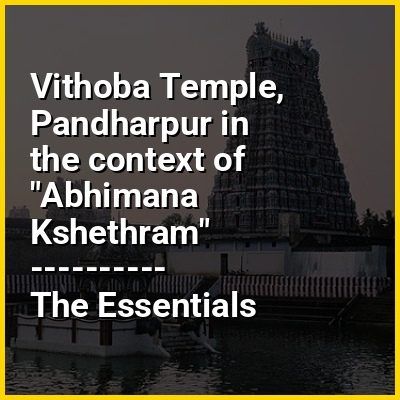
The Vithoba Temple, officially known as Shri Vitthal-Rukmini Mandir (Marathi: श्री विठ्ठल्-रूक्मिणि देऊळ, Kannada: ಶ್ರೀ ವಿಠ್ಠಲ-ರುಕ್ಮಿಣಿ ದೇವಸ್ಥಾನ), is a Hindu temple in Pandharpur, in the Indian state of Maharashtra. It is the main centre of worship for Vithoba, a form of the god Vishnu or Krishna, and his consort Rakhumai. It is one of the 108 Abhimana Kshethram of Vaishnavate tradition. The temple was built by King Vishnuvardhana (Bittideva) of Hoysala Empire between 1108 and 1152 CE upon being convinced by the historical figure Pundalik. Also, there is an inscription in the temple, of a Hoysala King Vira Someshwara dating back to 1237 CE, which grants the temple a village for its upkeep. It is the most visited temple in Maharashtra. The Warkaris start marching from their homes to the temple of Pandharpur in groups called Dindi (procession) to reach on Aashadhi Ekadashi and Kartiki Ekadashi. A dip in the holy river Chandrabhaga, on whose banks Pandharpur resides, is believed to have power to wash all sins. All the devotees are allowed to touch the feet of the idol of Vithoba. In May 2014, the temple became the first in India to invite women and people from backward classes as priests.

Although parts of the temple date to the 12th or 13th century, the existing structure mainly dates to the 17th century or later, and reflects the later Deccan style, with dome motifs and lobed arches. Attempts were made to destroy the temple by Afzal Khan, however the original central figure of the shrine was protected by the Brahmin priests Badve while Afzalkhan destroyed a similar idol.
↓ Menu
HINT:

In this Dossier

Vithoba Temple, Pandharpur in the context of Vithoba

Vithoba (IAST: Viṭhobā), also known as Vitthala (IAST: Viṭṭhala), and Panduranga (IAST: Pāṇḍuraṅga), is a Hindu deity predominantly worshipped in the Indian states of Maharashtra and Karnataka. He is a form of the Hindu deity Vishnu in his avatar: Krishna. Vithoba is often depicted as a dark young boy, standing arms akimbo on a brick, sometimes accompanied by his consort Rakhumai.

Vithoba is the focus of an essentially monotheistic, non-ritualistic bhakti-driven Varkari faith in Maharashtra and the Haridasa sect established in Dvaita Vedanta in Karnataka. Vithoba Temple, Pandharpur is his main temple. Vithoba legends revolve around his devotee Pundalik who is credited for bringing the deity to Pandharpur, and around Vithoba's role as a saviour to the poet-saints of the Varkari faith. The Varkari poet-saints are known for their unique genre of devotional lyric, the abhang, dedicated to Vithoba and composed in Marathi. Other devotional literature dedicated to Vithoba includes the Kannada hymns of the Haridasa and the Marathi versions of the generic aarti songs associated with rituals of offering light to the deity. The most important festivals of Vithoba are held on Shayani Ekadashi in the month of Ashadha, and Prabodhini Ekadashi in the month of Kartika.

View the full Wikipedia page for Vithoba
↑ Return to Menu