Uppsala University in the context of Uppsala


Uppsala University in the context of Uppsala

Uppsala University Study page number 1 of 2

Play TriviaQuestions Online!

or

Skip to study material about Uppsala University in the context of "Uppsala"


⭐ Core Definition: Uppsala University

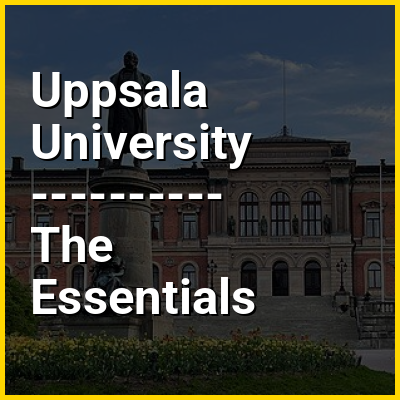
Uppsala University (UU) (Swedish: Uppsala universitet) is a public research university in Uppsala, Sweden. Founded in 1477, it is the oldest university in Sweden and the Nordic countries.

Founded in the 15th century, the university rose to significance during the rise of Sweden as a great power at the end of the 16th century and was then given relative financial stability with a large donation from King Gustavus Adolphus in the early 17th century. Uppsala also has an important historical place in Swedish national culture, and identity for the Swedish establishment: in historiography, religion, literature, politics, and music. Many aspects of Swedish academic culture in general, such as the white student cap, originated in Uppsala. It shares some peculiarities, such as the student nation system, with Lund University and the University of Helsinki.
↓ Menu
HINT:

In this Dossier

Uppsala University in the context of Carl Linnaeus

Carl Linnaeus (23 May 1707 – 10 January 1778), also known after ennoblement in 1761 as Carl von Linné, was a Swedish biologist and physician who formalised binomial nomenclature, the modern system of naming organisms. He is known as the "father of modern taxonomy". Many of his writings were in Latin; his name is rendered in Latin as Carolus Linnæus and, after his 1761 ennoblement, as Carolus a Linné.

Linnaeus was the son of a curate and was born in Råshult, in the countryside of Småland, southern Sweden. He received most of his higher education at Uppsala University and began giving lectures in botany there in 1730. He lived abroad between 1735 and 1738, where he studied and also published the first edition of his Systema Naturae in the Netherlands. He then returned to Sweden where he became professor of medicine and botany at Uppsala. In the 1740s, he was sent on several journeys through Sweden to find and classify plants and animals. In the 1750s and 1760s, he continued to collect and classify animals, plants, and minerals, while publishing several volumes. By the time of his death in 1778, he was one of the most acclaimed scientists in Europe.

View the full Wikipedia page for Carl Linnaeus
↑ Return to Menu

Uppsala University in the context of Uppsala Cathedral

59°51′29″N 17°38′00″E / 59.85806°N 17.63333°E / 59.85806; 17.63333

Uppsala Cathedral (Swedish: Uppsala domkyrka ) is a cathedral located between the University Hall of Uppsala University and the Fyris river in the centre of Uppsala, Sweden. A church of the Church of Sweden, the national church, in the Lutheran tradition, Uppsala Cathedral is the seat of the Archbishop of Uppsala, the primate of Sweden. It is also the burial site of King Eric IX (c. 1120–1160, reigned 1156–1160), who became the patron saint of the nation, and it was the traditional location for the coronation of new Kings of Sweden. The current archbishop is Martin Modéus and the current bishop is Karin Johannesson.

View the full Wikipedia page for Uppsala Cathedral
↑ Return to Menu

Uppsala University in the context of Hjalmar Hammarskjöld

Knut Hjalmar Leonard Hammarskjöld (Swedish: [ˈjǎlmar ˈhâmːarˌɧœld]; 4 February 1862 – 12 October 1953) was a Swedish statesman, diplomat, and academic who served as Prime Minister of Sweden from 1914 to 1917. An independent conservative, he represented Uppsala County in the Riksdag from 1923 to 1938. His premiership was marked by economic hardship, domestic unrest, and growing tensions over suffrage and food shortages during World War I, all while maintaining neutrality throughout the conflict.

A member of the prominent Hammarskjöld family, he studied law at Uppsala University. He later served as Minister for Justice and Minister of Education and Ecclesiastical Affairs. He was appointed as prime minister following the resignation of Karl Staaff.

View the full Wikipedia page for Hjalmar Hammarskjöld
↑ Return to Menu

Uppsala University in the context of Per Teodor Cleve

Per Teodor Cleve (10 February 1840 – 18 June 1905) was a Swedish chemist, biologist, mineralogist and oceanographer. He is best known for his discovery of the chemical elements holmium and thulium.

Born in Stockholm in 1840, Cleve earned his BSc and PhD from Uppsala University in 1863 and 1868, respectively. After receiving his PhD, he became an assistant professor of chemistry at the university. He later became professor of general and agricultural chemistry. In 1874 he theorised that didymium was in fact two elements; this theory was confirmed in 1885 when Carl Auer von Welsbach discovered neodymium and praseodymium.

View the full Wikipedia page for Per Teodor Cleve
↑ Return to Menu

Uppsala University in the context of Harald Hammarström

Harald Hammarström (born 1977 in Västerås, Sweden) is a Swedish linguist. He is currently an Associate Senior Lecturer at Uppsala University. Hammarström is especially known for his extensive work on curating Glottolog, a bibliographic database of the world's languages.

Hammarström has previously been employed as a researcher at the Max Planck Institute for the Science of Human History in Jena, Germany and at the Max Planck Institute for Psycholinguistics, in Nijmegen, Netherlands.

View the full Wikipedia page for Harald Hammarström
↑ Return to Menu

Uppsala University in the context of University of Copenhagen

The University of Copenhagen (Danish: Københavns Universitet, abbr. KU) is a public research university in Copenhagen, Denmark. Founded in 1479, the University of Copenhagen is the second-oldest university in Scandinavia, after Uppsala University.

The University of Copenhagen consists of six different faculties, with teaching taking place in its four distinct campuses, all situated in Copenhagen. The university operates 36 different departments and 122 separate research centres in Copenhagen, as well as a number of museums and botanical gardens in and outside the Danish capital. The University of Copenhagen also owns and operates multiple research stations around Denmark, with two additional ones located in Greenland. Additionally, The Faculty of Health and Medical Sciences and the public hospitals of the Capital and Zealand Region of Denmark constitute the conglomerate Copenhagen University Hospital.

View the full Wikipedia page for University of Copenhagen
↑ Return to Menu

Uppsala University in the context of Visby

Visby (Swedish: [ˈvǐːsbʏ] ) is an urban area in Sweden and the seat of Gotland Municipality in Gotland County on the island of Gotland with 24,330 inhabitants as of 2017. Visby is also the episcopal see for the Diocese of Visby. The Hanseatic city of Visby is one of the best-preserved medieval cities in Scandinavia, and, since 1995, it has been on the UNESCO World Heritage Site list. Among the most notable historical remains are the 3.4 km (2.1 mi) long town wall that encircles the town center, and a number of church ruins and its small decorative alleyways. The decline as a Hanseatic city in the Late Middle Ages was the cause for many stone houses being preserved in their original medieval style.

Visby is a popular vacation destination for Scandinavians during the summer and receives thousands of tourists every year. It is by far the most populous Swedish locality outside the Swedish mainland. The Gotland University is in Visby, and since 1 July 2013, it is a department of Uppsala University under the name Uppsala University–Campus Gotland. Visby is also the sole county seat in Sweden accessible from the mainland only by boat and air.

View the full Wikipedia page for Visby
↑ Return to Menu

Uppsala University in the context of University Hall (Uppsala University)

University Hall or the University Main Building (Swedish: Universitetshuset) is the main building of Uppsala University in Uppsala, Sweden. The building is situated in University Park close to Uppsala Cathedral. It was designed in Italian renaissance Beaux-Arts style by architect Herman Teodor Holmgren (1842-1914) and completed in 1887.

The building should not be confused with Carolina Rediviva, which is the Uppsala University Library building, or Gustavianum, the previous main building, which today is a museum.

View the full Wikipedia page for University Hall (Uppsala University)
↑ Return to Menu

Uppsala University in the context of Faculty of Law, University of Oslo

The Faculty of Law (Norwegian: Det juridiske fakultet) of the University of Oslo is Norway's oldest law faculty, established in 1811 as one of the four original faculties of The Royal Frederick University (renamed the University of Oslo in 1939). Alongside the law faculties in Copenhagen, Lund and Uppsala, it is one of Scandinavia's leading institutions of legal education and research. The faculty is the highest-ranked institution of legal education in Norway and is responsible for the professional law degree, one of the most competitive programmes at any Norwegian university. Those admitted to the law programme at the University of Oslo tend to have an average high school grade that is higher than the highest grade, and are usually the best in their class at high school level.

Prior to 1811, the University of Copenhagen was the only university of Denmark-Norway, and the curriculum of the new law faculty in Christiania (renamed Oslo in 1925) was based on that of the University of Copenhagen Faculty of Law and long retained strong similarities, even after the dissolution of the Dano-Norwegian union in 1814. As the only faculty of law in Norway until 1980, it traditionally educated all lawyers of Norway and remains the country's most important law faculty, educating around 75% of all new legal candidates in Norway. Its law programme is one of the most competitive programmes to get into at any Norwegian university, with an acceptance rate of 12%. The faculty offers education and conducts research in both law and in related areas such as criminology and sociology of law, and historically also in economics (its former Dean, Ragnar Frisch, was awarded the first Nobel Memorial Prize in Economic Sciences).

View the full Wikipedia page for Faculty of Law, University of Oslo
↑ Return to Menu

Uppsala University in the context of Anders Celsius

Anders Celsius (Swedish: [ˈânːdɛʂ ˈsɛ̌lːsɪɵs]; 27 November 1701 – 25 April 1744) was a Swedish astronomer, physicist and mathematician. He was professor of astronomy at Uppsala University from 1730 to 1744, but traveled from 1732 to 1735 visiting notable observatories in Germany, Italy and France. He founded the Uppsala Astronomical Observatory in 1741, and in 1742 proposed (an inverted form of) the centigrade temperature scale, which was later renamed Celsius in his honour.

View the full Wikipedia page for Anders Celsius
↑ Return to Menu

Uppsala University in the context of Uppsala University Botanical Garden

The Botanical Garden of Uppsala University (Swedish: Botaniska trädgården) is the principal botanical garden in the city of Uppsala, Sweden. It is situated near to Uppsala Castle and belongs to Uppsala University, having been created on land donated to the university by King Gustav III in 1787. The orangery now houses the Linneanum museum and is open to the public alongside the University's other botanical gardens, the Linnaean Garden and Linnaeus Hammarby.

The original Botanical Garden was founded in 1655 by Olaus Rudbeck, making it the oldest botanical garden in Sweden. Having been damaged in the 1702 Uppsala fire, it fell into neglect before it was redesigned and renovated by Carl Linnaeus, a professor at the University. Under the leadership of Linnaeus, the garden's collection grew massively and it became one of the most prominent botanical gardens in the world. The original site is maintained by Uppsala University to Linnaeus' recorded design to this day.

View the full Wikipedia page for Uppsala University Botanical Garden
↑ Return to Menu

Uppsala University in the context of Örebro University

Örebro University (Swedish: Örebro universitet) is a public university in Örebro, Sweden.

The university has its roots in the Örebro campus of Uppsala University, and became an independent state university college in 1977, Örebro University College (Högskolan i Örebro). The university college also incorporated three other existing educational institutions in Örebro: the teaching seminar, the sports college (founded in 1966) and the social work college (founded 1967). Örebro University College was granted the privileges of a university by the Government of Sweden in 1999, becoming the 12th university in Sweden.

View the full Wikipedia page for Örebro University
↑ Return to Menu

Uppsala University in the context of Nordic student meeting

Nordic student meetings (Swedish: Nordiska studentmöten) or Scandinavian student meetings (Swedish: Skandinaviska studentmöten) were a series of gatherings between students at the Scandinavian universities during the 19th century. Students from Uppsala University, Lund University, the University of Copenhagen and the University of Oslo took turns in inviting respectively visiting each other's universities. Students from the University of Helsinki were also invited, but were unable to attend, as the Emperor of Russia had imposed travel bans upon the Helsinki students.

The meetings were a part of the scandinavistic movement which sought to unify the Scandinavian countries politically and culturally. Scandinavianism originated from the University of Copenhagen and spread to Sweden in 1839, when students from Copenhagen marched across Øresund in order to meet the students at Lund. The first Scandinavian student meeting was held in Uppsala year 1843. The Nordic student cap was designed for this occasion, and was adopted as common headgear by all Scandinavian students at the subsequent meeting in Lund and Copenhagen, year 1845. In 1851 the students at the university of Oslo invited to a third student meeting. However, the Uppsala students were unable to attend since the semester hadn't stopped. These were instead invited back the following year. The final student meeting was held in Uppsala in 1875.

View the full Wikipedia page for Nordic student meeting
↑ Return to Menu

Uppsala University in the context of Carl Stål

Carl Stål (21 March 1833 – 13 June 1878) was a Swedish entomologist specialising in Hemiptera.

He was born at Karlberg Castle, Stockholm on 21 March 1833 and died at Frösundavik near Stockholm on 13 June 1878. He was the son of architect, author and officer Carl Stål then Colonel, Swedish Corps of Engineers. He matriculated at Uppsala University in 1853, studying medicine and passing the medico-philosophical examination in 1857. He then turned to entomology and completed his Ph.D. at the University of Jena in 1859. The same year he became assistant to Carl Henrik Boheman in the Zoological department of the Swedish Museum of Natural History in Stockholm, where, in 1867, he was appointed keeper with the title of professor.

View the full Wikipedia page for Carl Stål
↑ Return to Menu

Uppsala University in the context of Folkhemmet

Folkhemmet (Swedish: [ˈfɔ̂lkˌhɛmːɛt], lit.'the people's home') is a political concept that played an important role in the history of the Swedish Social Democratic Party and the Swedish welfare state. It is also sometimes used to refer to the long period between 1932 and 1976 when the Social Democrats were in power (except for a brief period in 1936 when Axel Pehrsson-Bramstorp from the Farmers' League was prime minister) and the concept was put into practice, but also works as a poetic name for the Swedish welfare state. Sometimes referred to as "the Swedish Middle Way", folkhemmet was viewed as midway between capitalism and socialism. The base of the folkhem vision is that the entire society ought to be like a family, where everybody contributes, but also where everybody looks after one another. The Swedish Social Democrats' successes in the postwar period is often explained by the fact that the party managed to motivate major social reforms with the idea of the folkhem and the national family's joint endeavor.

The Social Democratic leaders Ernst Wigforss, an avid Keynesian, Gustav Möller and Per Albin Hansson, a social corporatist, are considered the main architects of folkhemmet, with inspiration from the conservative Rudolf Kjellén and the Danish Social Democrats C.V. Bramsnæs and Karl Kristian Steincke. It was later developed by Prime Ministers Tage Erlander and Olof Palme until the Social Democratic Party lost power in 1976. Another important proponent was Hjalmar Branting, who came into contact with the concept while a student at Uppsala University, and went on to become the first socialist Prime Minister of Sweden.

View the full Wikipedia page for Folkhemmet
↑ Return to Menu

Uppsala University in the context of State Institute for Racial Biology

The State Institute for Racial Biology (SIRB, Swedish: Statens institut för rasbiologi, SIFR) was a Swedish governmental research institute founded in 1922 with the stated purpose of studying eugenics and human genetics. It was the most prominent institution for the study of "racial science" in Sweden. It was located in Uppsala. In 1958, it was renamed to the State Institute for Human Genetics (Institutionen för medicinisk genetik) and is today incorporated as a department of Uppsala University.

The institute's first head was Herman Lundborg. He retired in 1935. He was succeeded by Gunnar Dahlberg. An early research priority was studying the commonness of the "Nordic" racial traits in the Swedish population and the alleged downsides of race-mixing between the majority population and Finns and the Sámi people. Between 1936 and 1960, the majority of research projects at SIRB concerned medical genetics but racial science was still an important aspect of the institute.

View the full Wikipedia page for State Institute for Racial Biology
↑ Return to Menu