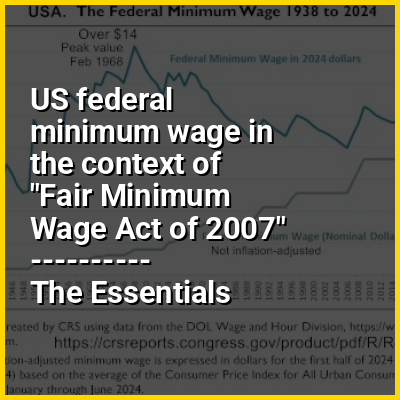
In the United States, the minimum wage is set by U.S. labor law and a range of state and local laws. The first federal minimum wage was instituted in the National Industrial Recovery Act of 1933, signed into law by President Franklin D. Roosevelt, but later found to be unconstitutional. In 1938, the Fair Labor Standards Act established it at 25¢ an hour ($5.58 in 2024). Its purchasing power peaked in 1968, at $1.60 ($14.47 in 2024). In 2009, Congress increased it to $7.25 per hour with the Fair Minimum Wage Act of 2007.
Employers have to pay workers the highest minimum wage of those prescribed by federal, state, and local laws. In August 2022, 30 states and the District of Columbia had minimum wages higher than the federal minimum. As of July 2025, 22 states and the District of Columbia have minimum wages above the federal level. In 2019, only 1.6 million Americans earned no more than the federal minimum wage—about ~1% of workers, and less than ~2% of those paid by the hour. Less than half worked full time; almost half were aged 16–25; and more than 60% worked in the leisure and hospitality industries, where many workers received tips in addition to their hourly wages. No significant differences existed among ethnic or racial groups; women were about twice as likely as men to earn minimum wage or less.