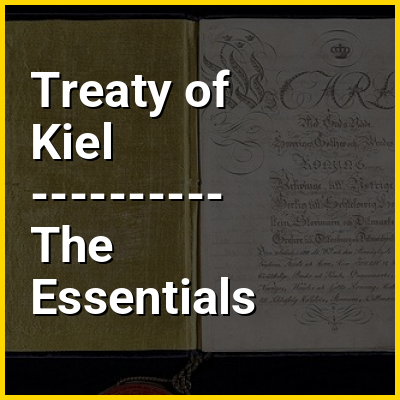
The Treaty of Kiel (Danish: Kieltraktaten) or Peace of Kiel (Swedish and Norwegian: Kielfreden or freden i Kiel) was concluded between the United Kingdom of Great Britain and Ireland and the Kingdom of Sweden on one side and the Kingdoms of Denmark and Norway on the other side on 14 January 1814 in Kiel. It ended the hostilities between the parties in the ongoing Napoleonic Wars, where the United Kingdom and Sweden were part of the anti-French camp (the Sixth Coalition) while Denmark–Norway was allied to the French Empire.
Frederick VI of Denmark joined the anti-French alliance, ceded Heligoland to George III of the United Kingdom, and further ceded the Kingdom of Norway to Charles XIII of Sweden in return for Swedish Pomerania. Specifically excluded from the exchange were the Norwegian dependencies of Greenland, Iceland and the Faroe Islands, which remained in the union with Denmark. (Norway would unsuccessfully contest the Danish claim to all of Greenland in the Eastern Greenland Case of 1931–1933.)