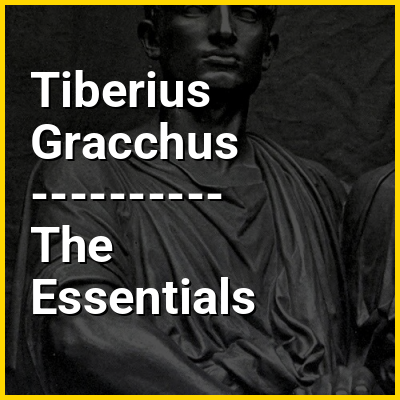
Tiberius Sempronius Gracchus (/ˈɡrækəs/; c. 163 – 133 BC) was a Roman politician best known for his agrarian reform law entailing the transfer of land from the Roman state and wealthy landowners to poorer citizens. He had also served in the Roman army, fighting in Africa during the Third Punic War and in Spain during the Numantine War.
His political future was imperilled during his quaestorship when he was forced to negotiate a humiliating treaty with the Numantines after they had surrounded the army he was part of in Spain. Seeking to rebuild that future and reacting to a supposed decline in the Roman population which he blamed on rich families buying up Italian land, he carried a land reform bill against strong opposition by another tribune during his term as tribune of the plebs in 133 BC. To pass and protect his reforms, Tiberius unprecedentedly had the tribune who opposed his programme deposed from office, usurped the senate's prerogatives over foreign policy, and attempted to stand for a consecutive tribunate. Fears of Tiberius' popularity and his willingness to break political norms led to his death, along with many supporters, in a riot instigated by his enemies.