The Picture of Dorian Gray in the context of "Classic book"

Play Trivia Questions online!

or

Skip to study material about The Picture of Dorian Gray in the context of "Classic book"

Ad spacer

⭐ Core Definition: The Picture of Dorian Gray

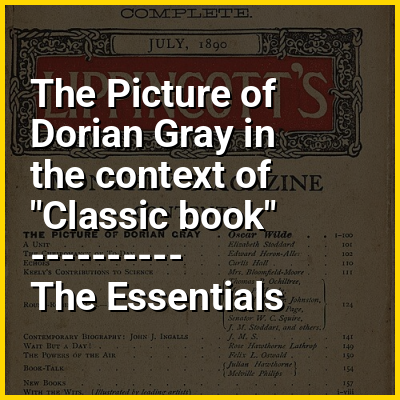
The Picture of Dorian Gray is an 1890 philosophical fiction and Gothic horror novel by Irish writer Oscar Wilde. A shorter novella-length version was published in the July 1890 issue of the American periodical Lippincott's Monthly Magazine, while the novel-length version was published in April 1891. Wilde's only novel, it is widely regarded as a classic of both Gothic and English literature, having been adapted many times for films, stage, plays, and other forms of art performances, in addition to inspiring the Dorian Awards since 2009.

The work was originally commissioned by J. M. Stoddart, the managing editor of Lippincott's Monthly Magazine, as a novella in 1889, but after facing public backlash for its perceived immorality, Wilde revised the story. He added a new preface which outlined his aesthetic philosophy and also expanded the initial narrative with six additional chapters. It was this expanded version which eventually became the novel. Critics have also noted that an earlier story written by Wilde, titled The Portrait of Mr. W. H. and published in 1889, has several of the themes and styles seen in this novel. The story itself originated from a conversation Wilde had with his friend, artist Basil Ward, who was an early version of the character Basil Hallward.
↓ Menu

>>>PUT SHARE BUTTONS HERE<<<
In this Dossier

The Picture of Dorian Gray in the context of Oscar Wilde

Oscar Fingal O'Fflahertie Wills Wilde (16 October 1854 – 30 November 1900) was an Irish author, poet and playwright. After writing in different literary styles throughout the 1880s, he became one of the most popular and influential dramatists in London in the early 1890s. He was a key figure in the emerging Aestheticism movement of the late 19th century and is regarded by many as the greatest playwright of the Victorian era. Wilde is best known for his Gothic novel The Picture of Dorian Gray (1890), his epigrams, plays and bedtime stories for children, as well as his criminal conviction in 1895 for gross indecency for homosexual acts.

Wilde's parents were Anglo-Irish intellectuals in Dublin. In his youth, Wilde learned to speak fluent French and German. At university, he read Greats; he demonstrated himself to be an exceptional classicist, first at Trinity College Dublin, then at Magdalen College, Oxford. He became associated with the emerging philosophy of aestheticism during this time, led by two of his tutors, Walter Pater and John Ruskin. After university, Wilde moved to London into fashionable cultural and social circles.

↑ Return to Menu