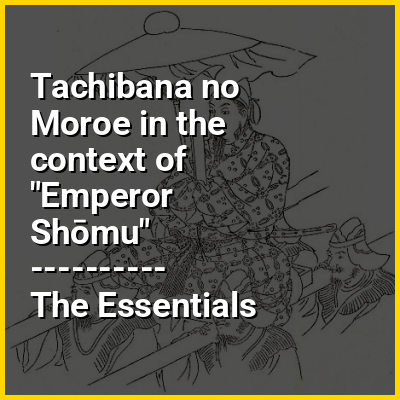
Tachibana no Moroe (橘 諸兄; 684-757) was a Japanese Imperial prince and official in the court of Emperor Shōmu and Empress Kōken.
He was the father of Tachibana no Naramaro .
Tachibana no Moroe (橘 諸兄; 684-757) was a Japanese Imperial prince and official in the court of Emperor Shōmu and Empress Kōken.
He was the father of Tachibana no Naramaro .
The Tachibana clan (橘氏, Tachibana-uji, Tachibana-shi) was one of the four most powerful court nobility (kizoku or kuge) families in Japan's Nara and early Heian periods—the other three were the Minamoto, the Fujiwara, and the Taira. Members of the Tachibana family often held high court posts within the Daijō-kan (Ministry of State), most frequently Sadaijin (Minister of the Left). Like the other major families at court, they also constantly sought to increase and secure their power by marrying into the imperial family. However, as the Minamoto clan and the Fujiwara clan gained power over the course of the 9th and 10th centuries, the Tachibana were eclipsed and eventually became scattered across the country. Though serving in high government posts outside the capital, they were thus denied the degree of power and influence within the court at Kyoto (Heian-kyō) which they once enjoyed.
The name of Tachibana was bestowed on Agata-no-Inukai no Michiyo by Empress Genmei in 708. She was the wife of Prince Minu, a descendant of Emperor Bidatsu and mothered Princes Katsuragi and Sai. She later married Fujiwara no Fuhito and bore Kōmyōshi (Empress Kōmyō). In 736, Princes Katsuragi and Sai were given the surname Tachibana, renouncing their imperial family membership. They became Tachibana no Moroe and Tachibana no Sai respectively.
Tachibana no Naramaro (橘奈良麻呂; 721–757) was a Japanese aristocrat (kuge), courtier, and statesman of the Nara period. He was the son of sadaijin Tachibana no Moroe and the second head of the Tachibana clan. He attained the court rank of shō shi-i no ge (正四位下) and the position of sangi, and posthumously of shō ichi-i (正一位) and daijō-daijin.
He was the leader of a plot to replace Fujiwara no Nakamaro and to overthrow Empress Kōken (Tachibana no Naramaro's Conspiracy). It was not successful.