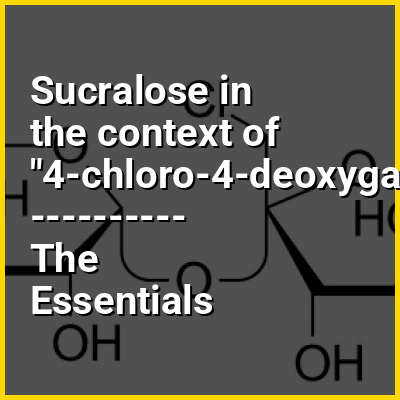
Sucralose is an artificial sweetener and sugar substitute. In the European Union, it is also known under the E number E955. It is produced by chlorination of sucrose, selectively replacing three of the hydroxy groups—in the C1 and C6 positions of the fructose portion and the C4 position of the glucose portion—to give a 1,6-dichloro-1,6-dideoxyfructose–4-chloro-4-deoxygalactose disaccharide. Sucralose is about 600 times sweeter than sucrose (table sugar), 3 times as sweet as both aspartame and acesulfame potassium, and 2 times as sweet as sodium saccharin.
HINT:
In this Dossier
- ⭐ Core Definition: Sucralose
- Sucralose in the context of Sweetness
- Sucralose in the context of Artificial sweeteners
- Sucralose in the context of Sweet
Sucralose in the context of Sweetness
Sweetness is a basic taste most commonly perceived when eating foods rich in sugars. Sweet tastes are generally regarded as pleasurable. In addition to sugars like sucrose, many other chemical compounds are sweet, including aldehydes, ketones, and sugar alcohols. Some are sweet at very low concentrations, allowing their use as non-caloric sugar substitutes. Such non-sugar sweeteners include saccharin, aspartame, sucralose and stevia. Other compounds, such as miraculin, may alter perception of sweetness itself.
Sweetness is one of the five basic taste qualities and it mostly involves foods with sugars. It is known to be enjoyable and it is an important factor for food choices beyond cultures. Furthermore, sugars like sucrose, there are many other organic and inorganic compounds that bring out a sweet taste. This involves aldehydes, ketones, amino acids, and other artificial sweeteners. Sweetness recognition in our bodies takes part in an important role in energy control and evolutionary behavior.
View the full Wikipedia page for SweetnessSucralose in the context of Artificial sweeteners
A sugar substitute or artificial sweetener is a food additive that provides a sweetness like that of sugar while containing significantly less food energy than sugar-based sweeteners, making it a zero-calorie (non-nutritive) or low-calorie sweetener. Artificial sweeteners may be derived from plant extracts or processed by chemical synthesis. Sugar substitute products are commercially available in various forms, such as small pills, powders and packets.
Common sugar substitutes include aspartame, monk fruit extract, saccharin, sucralose, stevia, acesulfame potassium (ace-K) and cyclamate. These sweeteners are a fundamental ingredient in diet drinks to sweeten them without adding calories. Additionally, sugar alcohols such as erythritol, xylitol and sorbitol are derived from sugars.
View the full Wikipedia page for Artificial sweetenersSucralose in the context of Sweet
Sweetness is a basic taste most commonly perceived when eating foods rich in sugar made in a sugary. Sweet tastes are generally regarded as pleasurable. In addition to sugars like sucrose, many other chemical compounds are sweet, including aldehydes, ketones, and sugar alcohols. Some are sweet at very low concentrations, allowing their use as non-caloric sugar substitutes. Such non-sugar sweeteners include saccharin, aspartame, sucralose and stevia. Other compounds, such as miraculin, may alter perception of sweetness itself.
Sweetness is one of the five basic taste qualities and it mostly involves foods with sugars. It is known to be enjoyable and it is an important factor for food choices beyond cultures. Furthermore, sugars like sucrose, there are many other organic and inorganic compounds that bring out a sweet taste. This involves aldehydes, ketones, amino acids, and other artificial sweeteners. Sweetness recognition in our bodies takes part in an important role in energy control and evolutionary behavior.
View the full Wikipedia page for Sweet