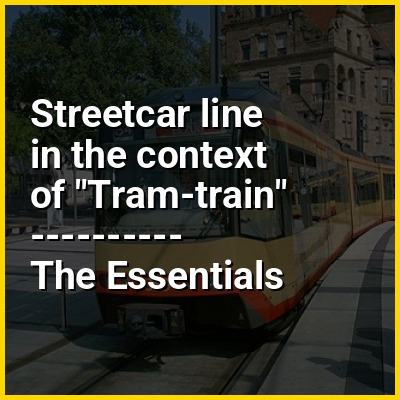
Streetcar line in the context of "Tram-train"

Play Trivia Questions online!

or

Skip to study material about Streetcar line in the context of "Tram-train"

Ad spacer

⭐ Core Definition: Streetcar line

A tram (also known as a streetcar or trolley in Canada and the United States, or a Tramcar) is an urban rail transit type in which vehicles, whether individual railcars or multiple-unit trains, run on tramway tracks on urban public streets; some include segments on segregated right-of-way. Trams are a variant of light rail and are included within this broader category. However, they differ from it in their frequent integration into urban streets, lower traffic signal priority, coexistence with other vehicles, and lower capacity. Their units are capable of forming motor coaches or motorcars, which allows for the operation of longer trains.

Trams are usually lighter and shorter than main line and rapid transit trains. Most trams use electrical power, usually fed by a pantograph sliding on an overhead line; older systems may use a trolley pole or a bow collector. In some cases, a contact shoe on a third rail is used. If necessary, they may have dual power systems—electricity in city streets and diesel in more rural environments. Occasionally, trams also carry freight. Tramlines or tram networks operated as public transport are called tramways, streetcars or simply trams, including systems separated from other traffic. Some trams, known as tram-trains, may have segments that run on mainline railway tracks, similar to interurban systems. The differences between these modes of rail transport are often indistinct, and systems may combine multiple features.
↓ Menu

>>>PUT SHARE BUTTONS HERE<<<
In this Dossier

Streetcar line in the context of Streetcar suburb

A streetcar suburb is a residential community whose growth and development was strongly shaped by the use of streetcar lines as a primary means of transportation. Such suburbs developed in the United States in the years before the automobile, when the introduction of the electric trolley or streetcar allowed the nation's burgeoning middle class to move beyond the central city's borders. Early suburbs were served by horsecars, but by the late 19th century, cable cars and electric streetcars, or trams, were used, allowing residences to be built farther away from the urban core of a city. Streetcar suburbs, usually called additions or extensions at the time, were the forerunner of today's suburbs in the United States and Canada. San Francisco's Western Addition is one of the best examples of streetcar suburbs before westward and southward expansion occurred.

Although most closely associated with the electric streetcar, the term can be used for any suburb originally built with streetcar-based transit in mind, thus some streetcar suburbs date from the early 19th century. As such, the term is general and one development called a streetcar suburb may vary greatly from others. However, some concepts are generally present in streetcar suburbs, such as straight (often gridiron) street plans and relatively narrow lots.

↑ Return to Menu