Staphylococcus aureus in the context of "Respiratory disease"

Play Trivia Questions online!

or

Skip to study material about Staphylococcus aureus in the context of "Respiratory disease"

Ad spacer

⭐ Core Definition: Staphylococcus aureus

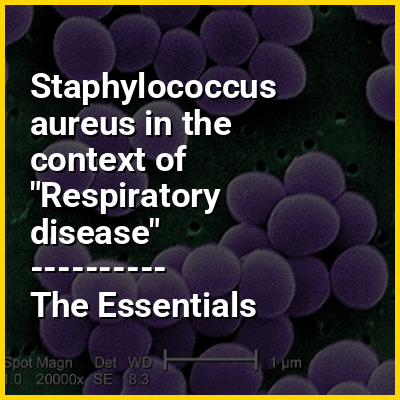
Staphylococcus aureus is a Gram-positive spherically shaped bacterium, a member of the Bacillota, and is a usual member of the microbiota of the body, frequently found in the upper respiratory tract and on the skin. It is often positive for catalase and nitrate reduction and is a facultative anaerobe, meaning that it can grow without oxygen. Although S. aureus usually acts as a commensal of the human microbiota, it can also become an opportunistic pathogen, being a common cause of skin infections including abscesses, respiratory infections such as sinusitis, and food poisoning. Pathogenic strains often promote infections by producing virulence factors such as potent protein toxins, and the expression of a cell-surface protein that binds and inactivates antibodies. S. aureus is one of the leading pathogens for deaths associated with antimicrobial resistance and the emergence of antibiotic-resistant strains, such as methicillin-resistant S. aureus (MRSA). The bacterium is a worldwide problem in clinical medicine. Despite much research and development, no vaccine for S. aureus has been approved.

An estimated 21% to 30% of the human population are long-term carriers of S. aureus, which can be found as part of the normal skin microbiota, in the nostrils, and as a normal inhabitant of the lower reproductive tract of females. S. aureus can cause a range of illnesses, from minor skin infections, such as pimples, impetigo, boils, cellulitis, folliculitis, carbuncles, scalded skin syndrome, and abscesses, to life-threatening diseases such as pneumonia, meningitis, osteomyelitis, endocarditis, toxic shock syndrome, bacteremia, and sepsis. It is still one of the five most common causes of hospital-acquired infections and is often the cause of wound infections following surgery. Each year, around 500,000 hospital patients in the United States contract a staphylococcal infection, chiefly by S. aureus. Up to 50,000 deaths each year in the U.S. are linked to staphylococcal infection.
↓ Menu

>>>PUT SHARE BUTTONS HERE<<<
In this Dossier

Staphylococcus aureus in the context of Biofilm

A biofilm is a syntrophic community of microorganisms in which cells stick to each other and often also to a surface. These adherent cells become embedded within a slimy extracellular matrix that is composed of extracellular polymeric substances (EPSs). The cells within the biofilm produce the EPS components, which are typically a polymeric combination of extracellular polysaccharides, proteins, lipids and DNA. Because they have a three-dimensional structure and represent a community lifestyle for microorganisms, they have been metaphorically described as "cities for microbes".

Biofilms may form on living (biotic) or non-living (abiotic) surfaces and can be common in natural, industrial, and hospital settings. They may constitute a microbiome or be a portion of it. The microbial cells growing in a biofilm are physiologically distinct from planktonic cells of the same organism, which, by contrast, are single cells that may float or swim in a liquid medium. Biofilms can form on the teeth of most animals as dental plaque, where they may cause tooth decay and gum disease.

↑ Return to Menu

Staphylococcus aureus in the context of Tampon

A tampon is a menstrual product designed to absorb blood and vaginal secretions by insertion into the vagina during menstruation. Unlike a pad, it is placed internally, inside of the vaginal canal. Once inserted correctly, a tampon is held in place by the vagina and expands as it soaks up menstrual blood.

As tampons also absorb the vagina's natural lubrication and bacteria in addition to menstrual blood, they can increase the risk of toxic shock syndrome by changing the normal pH of the vagina and increasing the risk of infections from the bacterium Staphylococcus aureus. TSS is a rare but life-threatening infection that requires immediate medical attention.

↑ Return to Menu

Staphylococcus aureus in the context of Gram stain

Gram stain (Gram staining or Gram's method) is a method of staining used to classify bacterial species into two large groups: gram-positive bacteria and gram-negative bacteria. It may also be used to diagnose a fungal infection. The name comes from the Danish bacteriologist Hans Christian Gram, who developed the technique in 1884.

Gram staining differentiates bacteria by the chemical and physical properties of their cell walls. Gram-positive cells have a thick layer of peptidoglycan in the cell wall that retains the primary stain, crystal violet. Gram-negative cells have a thinner peptidoglycan layer that allows the crystal violet to wash out on addition of ethanol. They are stained pink or red by the counterstain, commonly safranin or fuchsine. Lugol's iodine solution is always added after addition of crystal violet to form a stable complex with crystal violet that strengthens the bonds of the stain with the cell wall.

↑ Return to Menu

Staphylococcus aureus in the context of Toxic shock syndrome

Toxic shock syndrome (TSS) is a condition caused by bacterial toxins. Symptoms may include fever, rash, skin peeling, and low blood pressure. There may also be symptoms related to the specific underlying infection such as mastitis, osteomyelitis, necrotising fasciitis, or pneumonia.

TSS is typically caused by bacteria of the Streptococcus pyogenes or Staphylococcus aureus type, though others may also be involved. Streptococcal toxic shock syndrome is sometimes referred to as toxic-shock-like syndrome (TSLS). The underlying mechanism involves the production of superantigens during an invasive streptococcus infection or a localized staphylococcus infection. Risk factors for the staphylococcal type include the use of very absorbent tampons, skin lesions in young children characterized by fever, low blood pressure, rash, vomiting and/or diarrhea, and multiorgan failure. Diagnosis is typically based on symptoms.

↑ Return to Menu