South Kordofan in the context of Kaduqli


South Kordofan in the context of Kaduqli

⭐ Core Definition: South Kordofan

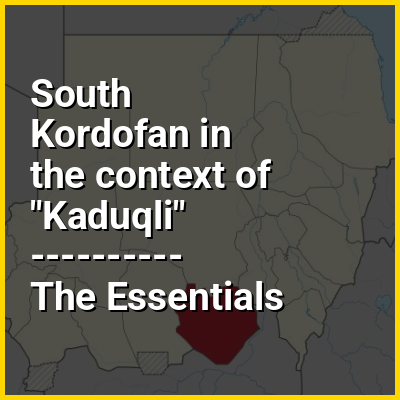
South Kordofan (Arabic: جنوب كردفان Ǧanūb Kurdufān) is one of the 18 wilayat or states of Sudan. It has an area of 158,355 km and an estimated population of approximately 2,107,623 people (2018 est). Kaduqli is the capital of the state. It is centered on the Nuba Mountains. At one time it was supposed that South Kordofan was the only state in (North) Sudan suitable for producing oil, but oil has also been discovered in neighboring White Nile State in larger quantities.

Under the Comprehensive Peace Agreement, residents of South Kordofan were to hold popular consultations in 2011 to determine the constitutional future of the state. However, South Kordofan governor Ahmed Haroun suspended the process, and violence followed. Haroun had previously been charged with war crimes against civilians and crime against humanity by the International Criminal Court.
↓ Menu
HINT:

In this Dossier

South Kordofan in the context of Kordofan

Kordofan (Arabic: كردفان Kurdufān) is a former province of central Sudan. In 1994 it was divided into three new federal states: North Kordofan, South Kordofan and West Kordofan. In August 2005, West Kordofan State was abolished and its territory divided between North and South Kordofan States, as part of the implementation of the Comprehensive Peace Agreement between the Government of Sudan and the Sudan People's Liberation Movement. West Kordofan was reestablished in July 2013.

View the full Wikipedia page for Kordofan
↑ Return to Menu

South Kordofan in the context of Nuba Mountains

The Nuba Mountains (Arabic: جبال النوبة), also referred to as the Nuba Hills, are an area located in South Kordofan, Sudan. The area is home to a group of indigenous ethnic groups known collectively as the Nuba peoples. They are not the same as the Nubians who are indigenous to north Sudan. Rather their name is derived from the name of the mountains, “Nuba”. In Antiquity, the area was a part of the Kingdom of Kush. In the Middle Ages, the Nuba mountains had been part of the Nubian kingdom of Alodia. In the 18th century, they became home to the kingdom of Taqali that controlled the hills of the mountains until their defeat by Mahdi Muhammad Ahmad. After the British defeated the Mahdi army, Taqali was restored as a client state. Infiltration of the Messiria tribe and Muraheleen of Baggara Arabs has been influential in modern conflicts. Up to 1.5 million people live in the mountains, mostly ethnic Nuba, with a small minority of Baggara.

View the full Wikipedia page for Nuba Mountains
↑ Return to Menu

South Kordofan in the context of Abyei status referendum

The Abyei status referendum is a delayed referendum that was originally due to be held in 2011 in which the residents of Abyei would decide either to remain part of the Sudanese South Kordofan region or to become part of the Bahr el Ghazal region of South Sudan.

Although an unofficial referendum was held in 2013, as of November 2025 no official referendum has been held.

View the full Wikipedia page for Abyei status referendum
↑ Return to Menu

South Kordofan in the context of Sudan People's Liberation Movement–North

The Sudan People's Liberation Movement–North (SPLM–N) is a political party and militant organization in Sudan based in the states of Blue Nile and South Kordofan. The group's armed forces are the Sudan People's Liberation Army–North (SPLA–N).

In 2011, when South Sudan broke away from Sudan to form a new country, most of the Sudan People's Liberation Movement (SPLM) and Army (SPLA) left with it, leaving units remaining across the border in Sudan to form the SPLA–N.

View the full Wikipedia page for Sudan People's Liberation Movement–North
↑ Return to Menu

South Kordofan in the context of Rashad languages

The Rashad languages form a small language family in the Nuba Hills of Sudan. They are named after Rashad District of South Kordofan.

View the full Wikipedia page for Rashad languages
↑ Return to Menu

South Kordofan in the context of Kordofanian languages

The Kordofanian languages are a geographic grouping of five language groups spoken in the Nuba Mountains of the South Kordofan region of Sudan: Talodi–Heiban languages, Lafofa languages, Rashad languages, Katla languages and Kadu languages. The first four groups are sometimes regarded as branches of the hypothetical Niger–Congo family, whereas Kadu is now widely seen as a branch of the proposed Nilo-Saharan family. The Kordofanian languages may be the oldest group of languages in the region.

View the full Wikipedia page for Kordofanian languages
↑ Return to Menu

South Kordofan in the context of Baggara

The Baggāra (Arabic: البَقَّارَة, romanizedal baqqāra, lit.'heifer herder'), also known as Chadian Arabs, are a nomadic confederation of people of mixed Arab and Arabized indigenous African ancestry, inhabiting a portion of the Sahel mainly between Lake Chad and the Nile river near south Kordofan, numbering over six million. They are known as Baggara and Abbala in Sudan, and as Shuwa Arabs in Chad, Cameroon and Nigeria.

The Baggāra mostly speak their distinct dialect, known as Chadian Arabic. However the Baggāra of Southern Kordofan, due to contact with the sedentary population and the Sudanese Arab camel herders of Kordofan, has led to some Sudanese Arabic influence on the dialect of that zone. They also have a common traditional mode of subsistence, nomadic cattle herding, although nowadays many lead a settled existence. Nevertheless, collectively they do not all necessarily consider themselves one people, i.e., a single ethnic group. The term "baggara culture" was introduced in 1994 by Braukämper.

View the full Wikipedia page for Baggara
↑ Return to Menu

South Kordofan in the context of Languages of the Nuba Mountains

The Nuba Mountains, located in the West Kordofan and South Kordofan states in the south of Sudan, are inhabited by a diverse set of populations (collectively known as Nuba peoples) speaking various languages not closely related to one another.

The vast diversity of languages among the Nuba Mountains indicates that the mountains served as a retreat area by many people in the past.

View the full Wikipedia page for Languages of the Nuba Mountains
↑ Return to Menu