Son mexicano in the context of La Huasteca


Son mexicano in the context of La Huasteca

⭐ Core Definition: Son mexicano

Son mexicano (Spanish: [ˈsom mexiˈkano]) is a style of Mexican folk music and dance that encompasses various regional genres, all of which are called son. The term son mexicano literally translates to “the Mexican sound” in English. Mexican sones are often rooted in a mix of Spanish, African, and Indigenous musical elements.

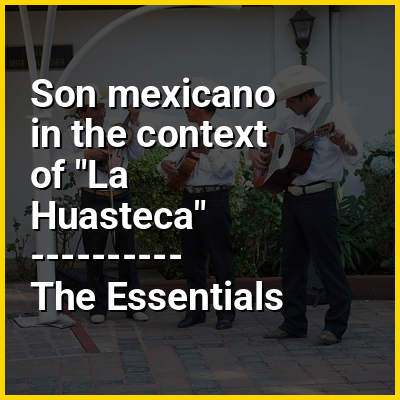
Major son traditions are located in the La Huasteca region, the Gulf coast, the Pacific coast of Guerrero and Oaxaca, Michoacán and Jalisco (where it later developed into mariachi). The music is historically played on string instruments such as guitars and violins, with elements which have not changed since the Spanish baroque music that was introduced into Mexico during the colonial period. The dance associated with this music is social and often includes a stomping rhythm on a raised platform to provide percussion.
↓ Menu
HINT:

In this Dossier

Son mexicano in the context of Mariachi

Mariachi (US: /ˌmɑːriˈɑːi/, UK: /ˌmær-/, Spanish: [maˈɾiaʧi]) is a genre of regional Mexican music dating back to at least the 18th century, evolving over time in the countryside of various regions of western Mexico. The usual mariachi group today consists of as many as eight violins, two trumpets and at least one guitar, including a high-pitched Mexican Vihuela and an acoustic bass guitar called a guitarrón, and all players take turns singing lead and doing backup vocals.

During the 19th- and 20th-century migrations from rural areas into Guadalajara, along with the Mexican government's promotion of national culture, mariachi came to be recognized as a distinctly Mexican son. Modifications of the music include influences from other music, such as polkas and waltzes, the addition of trumpets, and the use of charro outfits by mariachi musicians. The musical style began to take on national prominence in the first half of the 20th century, with its promotion at presidential inaugurations and on the radio in the 1920s. In 2011, UNESCO recognized mariachi as an Intangible Cultural Heritage; it joins six other entries on the Mexican list.

View the full Wikipedia page for Mariachi
↑ Return to Menu