Sind in the context of Thar Desert of Sindh


Sind in the context of Thar Desert of Sindh

⭐ Core Definition: Sind

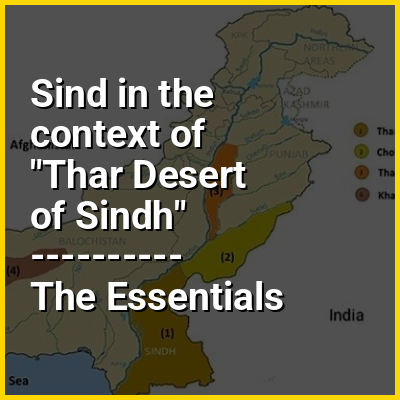
Sindh is a province of Pakistan, located in the southeastern region of the country. It is the third-largest Pakistani province by land area and second-largest by population (after Punjab). It is bounded by the Arabian Sea to the south and borders the provinces of Balochistan to the west and Punjab to the north; in addition to sharing an international border with the Indian states of Gujarat and Rajasthan to the east. Karachi, located along the southern coast, is the capital and largest city. Sindh's landscape consisting mostly of alluvial plains flanking the Indus River, the Thar Desert in the eastern portion of the province along the international border with India, and the Kirthar Mountains in the western portion of the province.

The economy of Sindh is the largest in Pakistan and then comes the province of Punjab; its provincial capital Karachi is the most populous city in the country as well as its main financial hub. Sindh is home to a large portion of Pakistan's industrial sector and contains two of the country's busiest commercial seaports: Port Qasim and the Port of Karachi. The remainder of Sindh consists of an agriculture-based economy and produces fruits, consumer items and vegetables for other parts of the country.
↓ Menu
HINT:

In this Dossier

Sind in the context of Bombay Presidency

The Bombay Presidency, officially called the Presidency of Bombay until 1937, later the Bombay Province, also called Bombay and Sind (1843–1936), was an administrative subdivision (province) of British India, with its capital in the city that came up over the seven islands of Bombay. The first mainland territory was acquired in the Konkan region with the Treaty of Bassein. Poona was the summer capital.

The Bombay Province has its beginnings in the city of Bombay that was leased in fee tail to the East India Company, via the Royal Charter of 27 March 1668 by King Charles II of England, who had in turn acquired Bombay on 11 May 1661, through the dowry by way of his marriage treaty with princess Catherine De Braganza, daughter of John IV of Portugal. The English East India Company transferred its Western India headquarters from Surat in the Gulf of Cambay after it was sacked, to the relatively safe Bombay Harbour in 1687. The province was brought under direct rule along with other parts of British India through Pitt's India Act, after the nationalisation of the East India Company. Major territorial acquisitions were made by the company after Anglo-Maratha Wars when the whole of the Peshwa's dominions and much of the Gaekwad's sphere of influence were annexed to the Bombay Presidency in stages up until 1818. Aden including Socotra were placed under Bombay in 1839, Sind was annexed by the company in 1843 after defeating the Talpur dynasty in the Battle of Hyderabad.

View the full Wikipedia page for Bombay Presidency
↑ Return to Menu