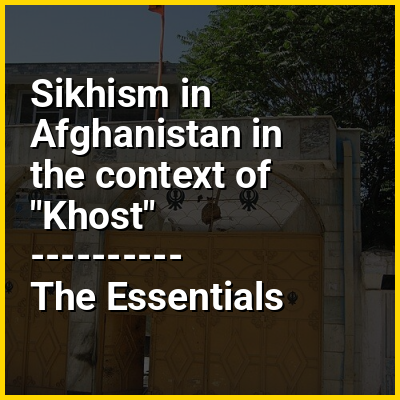
Sikhism in Afghanistan in the contemporary era is limited to small populations, primarily in major cities, with the largest numbers of Afghan Sikhs living in Jalalabad, Ghazni, Kabul, and to a lesser extent in Kandahar and Khost. Sikhs have been the most prevalent non-Muslim minority in Afghanistan, and despite the many political changes in recent Afghan history, governments and political groups have generally not indulged in openly discriminating against the Sikh minority; however, their status have been severely impacted amid the country's conflict since 1978.
The origin of the Sikh community in Afghanistan has broadly two streams, including indigenous Pashto and Dari speakers, descendants of converts to the teaching of the Sikhism’s founder Guru Nanak during his trip to Kabul around 1520. The second stream derive from the later Sikh Empire as it pushed westward, establishing trading routes for Sikh merchants into Kandahar and Kabul; this group speak Hindko, a dialect of Punjabi. Due to this mixed ancestry, Afghan Sikhs are from various ethnolinguistic backgrounds including Pashtun, Hindkowan or Punjabi.