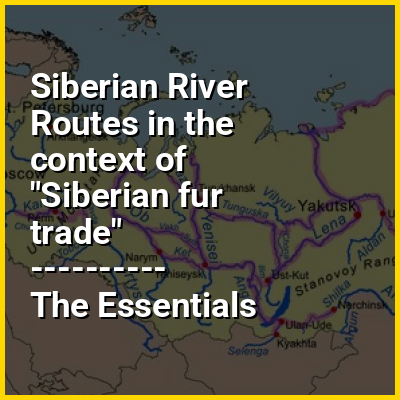
Siberian River Routes were the main ways of communication in Russian Siberia before the 1730s, when roads began to be built. The rivers were also of primary importance in the process of Russian conquest and exploration of vast Siberian territories eastwards. Since the three great Siberian rivers, the Ob, the Yenisey, and the Lena all flow into the Arctic Ocean, the aim was to find parts or branches of these rivers that flow approximately east-west and find short portages between them. Since Siberia is relatively flat, portages were usually short. Despite resistance from the Siberian tribes, Russian Cossacks were able to expand from the Urals to the Pacific in only 57 years (1582-1639). These river routes were crucial in the first years of the Siberian fur trade as the furs were easier to transport over water than land. The rivers connected the major fur gathering centers and provided for relatively quick transport between them.
HINT:
In this Dossier
- ⭐ Core Definition: Siberian River Routes
- Siberian River Routes in the context of Nizhnyaya Tunguska River
Siberian River Routes in the context of Nizhnyaya Tunguska River
The Nizhnyaya Tunguska (Russian: Ни́жняя Тунгу́ска, IPA: [ˈnʲiʐnʲɪjə tʊnˈɡuskə], meaning "Lower Tunguska") is a river in Siberia, Russia, that flows through the Irkutsk Oblast and the Krasnoyarsk Krai. The river is a right tributary of the Yenisey joining it at Turukhansk (see Siberian River Routes). The ice-free period on the Nizhnyaya Tunguska starts in mid-June and ends in the first half of October. The river forms the western limit of the Lena Plateau.
View the full Wikipedia page for Nizhnyaya Tunguska River