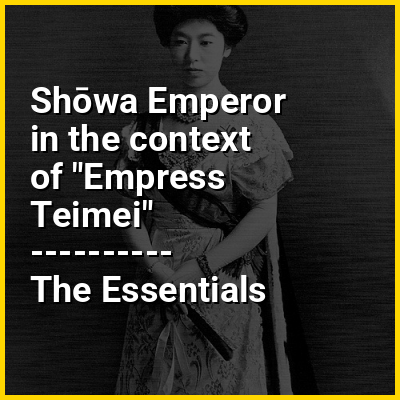
Hirohito (裕仁; 29 April 1901 – 7 January 1989), posthumously honored as Emperor Shōwa (昭和天皇, Shōwa Tennō), was the 124th emperor of Japan according to the traditional order of succession, reigning from 1926 until his death in 1989. He remains the longest-reigning emperor in Japanese history and one of the longest-reigning monarchs in the world. As emperor during the Shōwa era, Hirohito presided over the rise of Japanese militarism, Japan's invasion of mainland Asia, the Second Sino-Japanese War, the Pacific War, and the nation's postwar economic miracle.
Hirohito was born during the reign of his paternal grandfather, Emperor Meiji, as the first child of Crown Prince Yoshihito and Crown Princess Sadako (later Emperor Taishō and Empress Teimei). When Emperor Meiji died in 1912, Hirohito's father ascended the Chrysanthemum Throne, and Hirohito was proclaimed Crown Prince of Japan in 1916, making him the heir apparent. In 1921, he made an official visit to the United Kingdom and Western Europe, marking the first time a Japanese crown prince had traveled abroad. Due to his father's ill health, Hirohito became Sesshō of Japan (regent) that same year. In 1924, he married Princess Nagako Kuni, with whom he later had seven children: Shigeko, Sachiko, Kazuko, Atsuko, Akihito, Masahito and Takako. He became emperor upon his father's death in 1926.