Shikumen in the context of "Xintiandi"

Play Trivia Questions online!

or

Skip to study material about Shikumen in the context of "Xintiandi"

Ad spacer

⭐ Core Definition: Shikumen

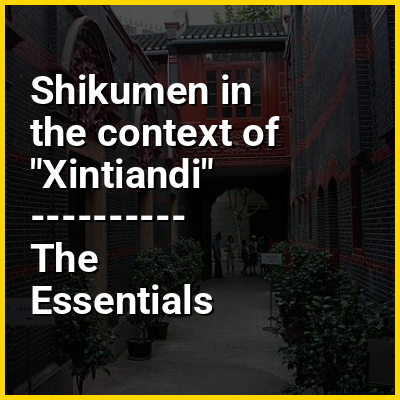
Shikumen (simplified Chinese: 石库门; traditional Chinese: 石庫門; pinyin: Shíkùmén; lit. 'Stone Warehouse Gate', Shanghainese: zaq⁸ khu¹ men⁶, IPA: [zᴀʔ¹¹ kʰu¹¹ mən²⁴]) is a traditional Shanghainese architectural style combining Western and Chinese elements that first appeared in the 1860s.

The term 石库门 is derived from the Shanghainese dialect 石箍门, 箍 meaning "to frame or encase." 石箍门 referred to the characteristically "stone-framed door" of the tenement houses. At the height of their popularity, there were 9,000 shikumen-style buildings in Shanghai, comprising 60% of the total housing stock of the city; however, the proportion is currently much lower, as most Shanghainese live in large apartment buildings. Shikumen is classified as one type of lilong residences, sometimes translated as "lane houses" in English.
↓ Menu

>>>PUT SHARE BUTTONS HERE<<<
In this Dossier

Shikumen in the context of 4th National Congress of the Chinese Communist Party

The 4th National Congress of the Chinese Communist Party was held in the Shanghai International Settlement at a shikumen residence in No. 8, Lane 256, Dongbaoxing Road, between 11 and 22 January 1925. The congress was attended by 20 participants representing 994 party members of the Chinese Communist Party (CCP). The congress succeeded the 3rd National Congress of the Chinese Communist Party and preceded the 5th National Congress of the Chinese Communist Party. A congress report was drafted by Chen Duxiu who represented the 3rd Central Executive Committee of the Chinese Communist Party.

↑ Return to Menu