Shalmaneser III in the context of Kizzuwadna


Shalmaneser III in the context of Kizzuwadna

⭐ Core Definition: Shalmaneser III

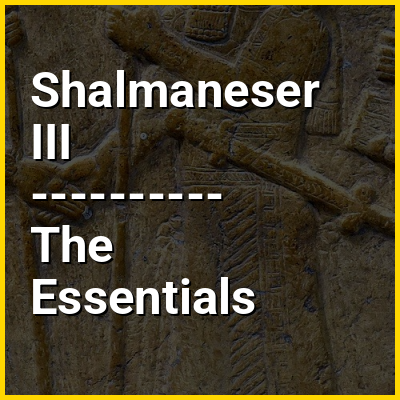
Shalmaneser III (Šulmānu-ašarēdu, "the god Shulmanu is pre-eminent") was king of the Neo-Assyrian Empire from 859 BC to 824 BC.

His long reign was a constant series of campaigns against the eastern tribes, the Babylonians, the nations of Mesopotamia, Syria, as well as Kizzuwadna and Urartu. His armies penetrated to Lake Van and the Taurus Mountains; the Neo-Hittites of Carchemish were compelled to pay tribute, and the kingdoms of Hamath and Aram Damascus were subdued. It is in the annals of Shalmaneser III from the 850s BC that the Arabs and Chaldeans first appear in recorded history.

↓ Menu
HINT:

In this Dossier

Shalmaneser III in the context of Neo-Assyrian Empire

The Neo-Assyrian Empire was the fourth and penultimate stage of ancient Assyrian history. Beginning with the accession of Adad-nirari II in 911 BC, the Neo-Assyrian Empire grew to dominate the ancient Near East and parts of South Caucasus, North Africa and Eastern Mediterranean throughout much of the 9th to 7th centuries BC, becoming the largest empire in history up to that point. Because of its geopolitical dominance and ideology based in world domination, the Neo-Assyrian Empire has been described as the first world empire in history. It influenced other empires of the ancient world culturally, administratively, and militarily, including the Neo-Babylonians, the Achaemenids, and the Seleucids. At its height, the empire was the strongest military power in the world and ruled over all of Mesopotamia, the Levant and Egypt, as well as parts of Anatolia, Arabia and modern-day Iran and Armenia.

The early Neo-Assyrian kings were chiefly concerned with restoring Assyrian control over much of northern Mesopotamia, eastern Anatolia and Levant, since significant portions of the preceding Middle Assyrian Empire (1365–1050 BC) had been lost during the late 11th century BC. Under Ashurnasirpal II (r.883–859 BC), Assyria once more became the dominant power of the Near East, ruling the north undisputed. Ashurnasirpal's campaigns reached as far as the Mediterranean, and he oversaw the transfer of the imperial capital from the traditional city of Assur to the more centrally located Kalhu (later known as Calah in the Bible and Nimrud to the Medieval Arabs) The empire grew even more under Ashurnasirpal's successor Shalmaneser III (r.859–824 BC), though it entered a period of stagnation after his death, referred to as the "age of the magnates". During this time, the chief wielders of political power were prominent generals and officials, and central control was unusually weak. This age came to an end with the rule of Tiglath-Pileser III (r.745–727 BC), who re-asserted Assyrian royal power and more than doubled the size of the empire through wide-ranging conquests. His most notable conquests were Babylonia in the south and large parts of the Levant. Under the Sargonid dynasty, which ruled from 722 BC to the fall of the empire, Assyria reached its apex. Under Sennacherib (r.705–681 BC), the capital was transferred to Nineveh, and under Esarhaddon (r.681–669 BC) the empire reached its largest extent through the conquest of Egypt. Despite being at the peak of its power, the empire experienced a swift and violent fall in the late 7th century BC, destroyed by a Babylonian uprising and an invasion by the Medes. The causes behind how Assyria could be destroyed so quickly continue to be debated among scholars.

View the full Wikipedia page for Neo-Assyrian Empire
↑ Return to Menu

Shalmaneser III in the context of Puzur-Ashur I

Puzur-Ashur I (Akkadian: 𒁍𒀫𒀸𒋩, romanized: Pu-AMAR-Aš-ŠUR; died c. 2008 BC) was an Assyrian king in the 21st century BC. He is generally regarded as the founder of Assyria as an independent state, c. 2025 BC, although there are predecessors listed on the Assyrian King List dating to the early 22nd century BC.

He is in the Assyrian King List and is referenced in the inscriptions of later kings (his son and successor Shalim-ahum and the later Ashur-rim-nisheshu and Shalmaneser III). These later kings mentioned him among the kings who had renewed the city walls of Assur begun by Kikkia.

View the full Wikipedia page for Puzur-Ashur I
↑ Return to Menu

Shalmaneser III in the context of Ashurnasirpal II

Ashur-nasir-pal II (transliteration: Aššur-nāṣir-apli, meaning "Ashur is guardian of the heir") was the third king of the Neo-Assyrian Empire from 883 to 859 BC. Ashurnasirpal II succeeded his father, Tukulti-Ninurta II. His son and successor was Shalmaneser III and his queen was Mullissu-mukannišat-Ninua.

View the full Wikipedia page for Ashurnasirpal II
↑ Return to Menu

Shalmaneser III in the context of Ahab

Ahab (/ˈhæb/; Hebrew: אַחְאָב, romanizedʾAḥʾāḇ; Akkadian: 𒀀𒄩𒀊𒁍, romanized: Aḫâbbu; Koine Greek: Ἀχαάβ, romanized: Akhaáb; Latin: Achab) was a king of the Kingdom of Israel (Samaria), the son and successor of King Omri, and the husband of Jezebel of Sidon, according to the Hebrew Bible. He is depicted in the Bible as a Baal worshipper and is criticized for causing moral decline in Israel, though modern scholars argue that Ahab was a Yahwist himself.

The existence of Ahab is historically supported outside the Bible. The contemporary Kurkh Monolith inscription of king Shalmaneser III from the Neo-Assyrian Empire documented in 853 BC that Shalmaneser III defeated an alliance of a dozen kings in the Battle of Qarqar; one of these was Ahab. Though not named, he is also mentioned on the inscriptions of the Mesha Stele.

View the full Wikipedia page for Ahab
↑ Return to Menu

Shalmaneser III in the context of Diauehi

Diauehi (Modern Georgian: დიაოხი Diaokhi, Urartian Diauehi, Greek Τάοχοι Taochoi, Armenian Տայք Tayk, possibly Assyrian Daiaeni) was a tribal union located in northeastern Anatolia, that was recorded in Assyrian and Urartian sources during the Iron Age. It is usually (though not always) identified with the earlier Daiaeni (Dayaeni), attested in the Yonjalu inscription of the Assyrian king Tiglath-Pileser I's third year (1118 BC) and in later records by Shalmaneser III (845 BC). While it is unknown what language(s) they spoke, they may have been speakers of a Kartvelian, Armenian, Iranian, or Hurrian language.

View the full Wikipedia page for Diauehi
↑ Return to Menu

Shalmaneser III in the context of King Ahab

Ahab (/ˈ.hæb/, AY-habb; Hebrew: אַחְאָב, romanizedʾAḥʾāḇ; Akkadian: 𒀀𒄩𒀊𒁍, romanized: Aḫâbbu; Koine Greek: Ἀχαάβ, romanized: Akhaáb; Latin: Achab) was a king of Israel, the son and successor of King Omri, and the husband of Jezebel of Sidon, according to the Hebrew Bible. He is depicted in the Bible as a Baal worshipper and is criticized for causing moral decline in Israel, though modern scholars question this.

The existence of Ahab is historically supported outside the Bible. The contemporary Kurkh Monolith inscription of king Shalmaneser III from the Neo-Assyrian Empire documented in 853 BC that Shalmaneser III defeated an alliance of a dozen kings in the Battle of Qarqar; one of these was Ahab. Though not named, he is also mentioned on the inscriptions of the Mesha Stele.

View the full Wikipedia page for King Ahab
↑ Return to Menu