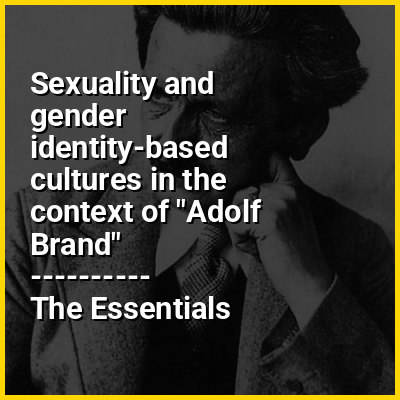
Sexuality and gender identity-based cultures are subcultures and communities composed of people who have shared experiences, backgrounds, or interests due to common sexual or gender identities. Among the first to argue that members of sexual minorities can also constitute cultural minorities were Adolf Brand, Magnus Hirschfeld, and Leontine Sagan in Germany. These pioneers were later followed by the Mattachine Society and the Daughters of Bilitis in the United States.
Not all individuals of various gender and sexual orientations self-identify with or participate in a particular subculture. Reasons include geographic distance, unawareness of the subculture's existence, fear of social stigma, or personal preference for privacy. Some have suggested that the identities defined by the Western heterosexualized cultures are based on sexuality that have serious flaws and often limit public discussion. The lack of inclusive spaces can lead to peopling rejecting who they are and ignoring their own sexual needs. This rejection can lead to people being classified under sexual identities that doesn't feel representative to them as a person.