Seleucid–Mauryan War in the context of Satrapies


Seleucid–Mauryan War in the context of Satrapies

⭐ Core Definition: Seleucid–Mauryan War

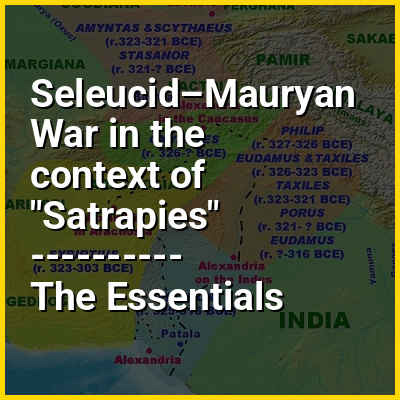
The Seleucid–Mauryan War was a confrontation between the Seleucid and Mauryan empires that took place sometime between 305 and 303 BCE, when Seleucus I Nicator of the Seleucid Empire crossed the Indus river into the former Indian satrapies of the Macedonian Empire, which had been conquered by Emperor Chandragupta Maurya of the Maurya Empire.

The confrontation resulted in a dynastic marriage-alliance between Seleucus and Chandragupta, the gift of war elephants to Seleucus, and the transferring of control over the Indus Valley region and (possibly) part of Afghanistan to Chandragupta. The alliance freed Seleucus to turn his attention toward his rivals in the west, while Chandragupta secured control over the areas that he had sought, the Maurya Empire emerging as the dominant power of the Indian subcontinent.
↓ Menu
HINT:

In this Dossier

Seleucid–Mauryan War in the context of Paropamisadae

Paropamisadae or Parapamisadae (Ancient Greek: Παροπαμισάδαι or Παροπανισάδαι) was a satrapy of the Alexandrian Empire in modern Pakistan, which largely coincided with the Achaemenid province of Parupraesanna. It consisted of the districts of Sattagydia (Bannu basin), Gandhara (Kabul, Peshawar, and Taxila), and Oddiyana (Swat Valley). Paruparaesanna is mentioned in the Akkadian language and Elamite language versions of the Behistun Inscription of Darius the Great, whereas in the Old Persian version it is called Gandāra. The entire satrapy was subsequently ceded by Seleucus I Nicator to Chandragupta Maurya after Mauryan Victory in Selucid-Mauryan war following a treaty.

View the full Wikipedia page for Paropamisadae
↑ Return to Menu