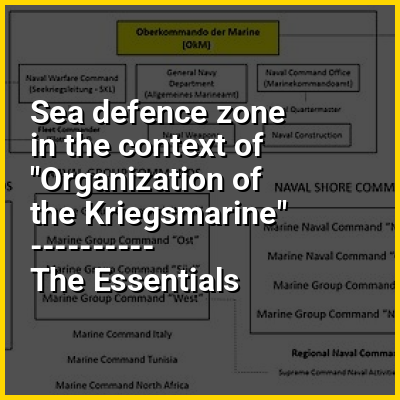
During World War II, a sea defense zone (Seeverteidigung) was a tactical area in the organization of the Kriegsmarine intended to provide operational command of all German naval forces, within a given geographical area, in the event of actual enemy attack on the coastline of occupied Europe.
HINT:
In this Dossier
Sea defence zone in the context of Atlantic Wall
The Atlantic Wall (German: Atlantikwall) was an extensive system of coastal defences and fortifications built by Nazi Germany between 1942 and 1944 along the coast of continental Europe and Scandinavia as a defence against an anticipated Allied invasion of Nazi-occupied Europe from the United Kingdom, during World War II. The manning and operation of the Atlantic Wall was administratively overseen by the German Army, with some support from Luftwaffe ground forces. The Kriegsmarine (German Navy) maintained a separate coastal defence network, organised into a number of sea defence zones.
Hitler ordered the construction of the fortifications in 1942 through his Führer Directive No. 40. More than half a million French workers were drafted to build it. The wall was frequently mentioned in Nazi propaganda, where its size and strength were usually exaggerated. The fortifications included colossal coastal guns, batteries, mortars, and artillery, and thousands of artillery pieces were stationed in its defences. Today, ruins of the wall exist in all of the nations where it was built, although many structures have fallen into the ocean or have been demolished over the years.
View the full Wikipedia page for Atlantic Wall