Sanitary manhole in the context of "Manhole"

Play Trivia Questions online!

or

Skip to study material about Sanitary manhole in the context of "Manhole"


⭐ Core Definition: Sanitary manhole

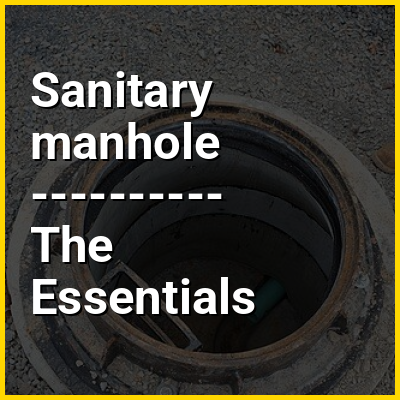
A sanitary manhole (sewer manhole, sanitary sewer manhole or sewer maintenance hole) is a manhole that is used as an access point for maintenance and inspection of an underground sanitary sewer system. Sanitary manholes are sometimes used as vents to prevent the buildup of pressurized sewage gas. Additionally, they are used for debris removal, and application of chemicals such as degreaser and insecticide.

When underground sewer lines are laid close to the ground level (this may be at the depths of less than 0.75 metres (2.5 ft) or 2 metres (6.6 ft) depending on local regulations), an inspection chamber is used as an access point instead. Inspection chambers allow access to sewer lines without requiring a person to get in them.
↓ Menu

👉 Sanitary manhole in the context of Manhole

A manhole (utility hole, maintenance hole, or sewer hole) is an opening to a confined space such as a shaft, utility vault, or large vessel. Manholes, typically protected by a manhole cover, are often used as an access point for an underground public utility, allowing inspection, maintenance, and system upgrades. The majority of underground services have manholes, including water, sewers, telephone, electricity, storm drains, district heating, and gas.

Manholes are generally found in urban areas, in streets and occasionally under sidewalks. In rural and undeveloped areas, services such as telephone and electricity are usually carried on utility poles or even pylons rather than underground.

↓ Explore More Topics
In this Dossier

Sanitary manhole in the context of Sewerage

Sewerage (or sewage system) is the infrastructure that conveys sewage or surface runoff (stormwater, meltwater, rainwater) using sewers. It encompasses components such as receiving drains, manholes, pumping stations, storm overflows, and screening chambers of the combined sewer or sanitary sewer. Sewerage ends at the entry to a sewage treatment plant or at the point of discharge into the environment. It is the system of pipes, chambers, manholes or inspection chamber, etc. that conveys the sewage or storm water.

In many cities, sewage (municipal wastewater or municipal sewage) is carried together with stormwater, in a combined sewer system, to a sewage treatment plant. In some urban areas, sewage is carried separately in sanitary sewers and runoff from streets is carried in storm drains. Access to these systems, for maintenance purposes, is typically through a manhole. During high precipitation periods a sewer system may experience a combined sewer overflow event or a sanitary sewer overflow event, which forces untreated sewage to flow directly to receiving waters. This can pose a serious threat to public health and the surrounding environment.

↑ Return to Menu

Sanitary manhole in the context of Sanitary sewer overflow

Sanitary sewer overflow (SSO) is a condition in which untreated sewage is discharged from a sanitary sewer into the environment prior to reaching sewage treatment facilities. When caused by rainfall it is also known as wet weather overflow. Causes of sanitary sewer overflows include: Blockage of sewer lines, infiltration/Inflow of excessive stormwater into sewer lines during heavy rainfall, malfunction of pumping station lifts or electrical power failure, broken sewer lines. Prevention of such overflow events involves regular maintenance and timely upgrades of infrastructure.

SSOs can cause gastrointestinal illnesses (waterborne diseases), beach closures and restrictions on fish and shellfish consumption.

↑ Return to Menu

Sanitary manhole in the context of Gravity sewer

A gravity sewer is a conduit utilizing the energy resulting from a difference in elevation to remove unwanted water. The term sewer implies removal of sewage or surface runoff rather than water intended for use; and the term gravity excludes water movement induced through force mains or vacuum sewers. Most sewers are gravity sewers because gravity offers reliable water movement with no energy costs wherever grades are favorable. Gravity sewers may drain to sumps where pumping is required to either force sewage to a distant location or lift sewage to a higher elevation for entry into another gravity sewer, and lift stations are often required to lift sewage into sewage treatment plants. Gravity sewers can be either sanitary sewers, combined sewers, storm sewers or effluent sewers.

↑ Return to Menu