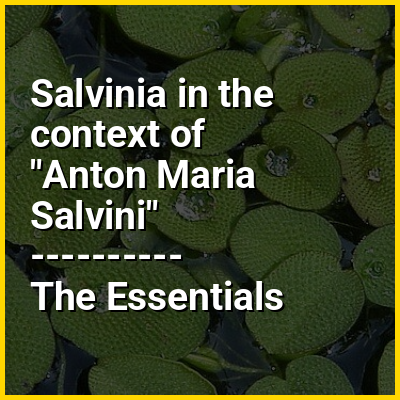
Salvinia or watermosses is a genus of free-floating aquatic ferns in the family Salviniaceae. The genus is named in honor of 17th-century Italian naturalist Anton Maria Salvini, and the generic name was first published in 1754 by French botanist Jean-François Séguier in Plantae Veronenses, a description of the plants found around Verona. Twelve species are recognized, at least three of which (S. molesta, S. herzogii, and S. minima) are believed to be hybrids in part because their sporangia are found to be empty.
Salvinia is related to the other water ferns, including the mosquito fern Azolla. Recent sources include both Azolla and Salvinia in Salviniaceae, although each genus was formerly given its own family.