The Salt Tax Revolt (Spanish: Rebelión de la Sal) took place in the Spanish province of Biscay (Vizcaya) between 1631 and 1634, and was rooted in an economic conflict concerning the price and ownership of salt. It consisted of a series of violent incidents in opposition to Philip IV's taxation policy, and the rebellion quickly evolved into a broader social protest against economic inequalities.
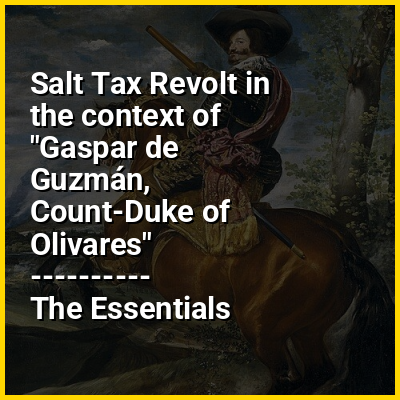
The origin of the rebellion was the Royal Decree of 3 January 1631, in which Gaspar de Guzmán, Count-Duke of Olivares raised the price of salt by 44%, while also ordering the requisition of all of the salt stored in Biscay, which could, from that point on, only be sold by the royal treasury. The motive of this measure, which contravened the chartered privileges of the domain and its tax exemption, was the need by the monarchy of Habsburg Spain to maintain its costly army in the wars of Northern Europe.