Saigon cinnamon in the context of Cinnamomum cassia


Saigon cinnamon in the context of Cinnamomum cassia

⭐ Core Definition: Saigon cinnamon

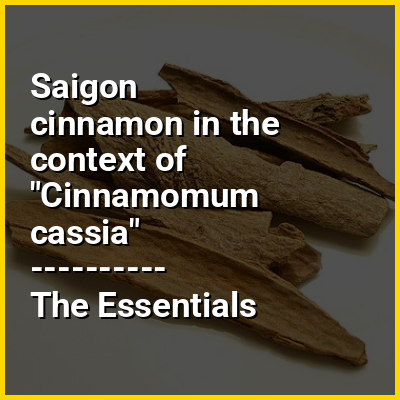
Saigon cinnamon (Cinnamomum loureiroi, also known as Vietnamese cinnamon or Vietnamese cassia and quế trà my, quế thanh, or " quế trà bồng" in Vietnam) is an evergreen tree indigenous to mainland Southeast Asia. Saigon cinnamon is more closely related to cassia (C. cassia) than to Ceylon cinnamon (C. verum), though in the same genus as both. Saigon cinnamon has 1–5% essential oil content and 25% cinnamaldehyde in essential oil. Consequently, among the species, Saigon cinnamon commands a relatively high price.

The scientific name was originally spelled as Cinnamomum loureirii, but because the species is named after the botanist João de Loureiro, this is to be treated under the ICN as an orthographic error for the correctly derived spelling of loureiroi.
↓ Menu
HINT:

In this Dossier

Saigon cinnamon in the context of Cinnamon

Cinnamon is a spice obtained from the inner bark of several tree species from the genus Cinnamomum. Cinnamon is used mainly as an aromatic condiment and flavouring additive in a wide variety of cuisines, in particular sweet and savoury dishes such as biscuits, breakfast cereals, snack foods, bagels, teas, hot chocolate, and traditional foods. The aroma and flavour of cinnamon derive from its essential oil and principal component, cinnamaldehyde, as well as numerous other constituents, including eugenol.

Cinnamon is the name for several species of trees and the commercial spice products that some of them produce. All are members of the genus Cinnamomum in the family Lauraceae. Only a few Cinnamomum species are grown commercially for spice. Cinnamomum verum (alternatively C. zeylanicum), known as "Ceylon cinnamon" after its origins in Sri Lanka (formerly Ceylon), is considered to be "true cinnamon", but most cinnamon in international commerce is derived from four other species, usually and more correctly referred to as "cassia": C. burmanni (Indonesian cinnamon or Padang cassia), C. cassia (Chinese cinnamon or Chinese cassia), C. loureiroi (Saigon cinnamon or Vietnamese cassia), and the less common C. citriodorum (Malabar cinnamon).

View the full Wikipedia page for Cinnamon
↑ Return to Menu

Saigon cinnamon in the context of Vietnamese cuisine

Vietnamese cuisine encompasses the foods and beverages originated from Vietnam. Meals feature a combination of five fundamental tastes (ngũ vị): sweet, salty, bitter, sour, and spicy. The distinctive nature of each dish reflects one or more elements (such as nutrients and colors), which are also based around a five-pronged philosophy. Vietnamese recipes use ingredients like lemongrass, ginger, mint, Vietnamese mint, brown sugar, long coriander, Saigon cinnamon, bird's eye chili, soy sauce, lime, and Thai basil leaves. Traditional Vietnamese cooking has often been characterised as using fresh ingredients, not using much dairy or oil, having interesting textures, and making use of herbs and vegetables. The cuisine is also low in sugar and is almost always naturally gluten-free, as many of the dishes are rice-based instead of wheat-based, made with rice noodles, bánh tráng rice paper wrappers and rice flour.

View the full Wikipedia page for Vietnamese cuisine
↑ Return to Menu