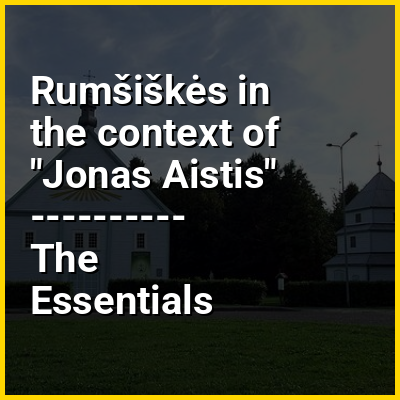
Rumšiškės is a Lithuanian town (population 1,700), situated 20 km (12 mi) east of Kaunas on the northern bank of Kaunas Reservoir. Southern part of the town (including the birthplace of Lithuanian poet Jonas Aistis) is now under the waters of the artificial lake. The 18th century St. Michael Archangel church of Rumšiškės (rebuilt in the 19th century) was saved and moved to its present place in 1958, when the reservoir was created.
HINT:
In this Dossier
Rumšiškės in the context of Forced settlements in the Soviet Union
Special settlements in the Soviet Union were the result of population transfers and were performed in a series of operations organized according to social class or nationality of the deported. Resettling of "enemy classes" such as prosperous peasants and entire populations by ethnicity was a method of political repression in the Soviet Union, although separate from the Gulag system of penal labor. Involuntary settlement played a role in the colonization of virgin lands of the Soviet Union. This role was specifically mentioned in the first Soviet decrees about involuntary labor camps. Compared to the Gulag labor camps, the involuntary settlements had the appearance of "normal" settlements: people lived in families, and there was slightly more freedom of movement; however, that was permitted only within a small specified area. All settlers were overseen by the NKVD; once a month a person had to register at a local law enforcement office at a selsoviet in rural areas or at a militsiya department in urban settlements. As second-class citizens, deported peoples designated as "special settlers" were prohibited from holding a variety of jobs, returning to their region of origin, attending prestigious schools, and even joining the cosmonaut program. Due to this, special settlements have been described as a type of apartheid by historian J. Otto Pohl.
After the special settlement system was officially abolished in the 1950s, most deported indigenous peoples were allowed to return to their homelands, except for the Crimean Tatars and Meskhetian Turks, who were denied the right of return in the Khrushchev and Brezhnev era and largely remained in areas they were deported to because of the Soviet residence permit system (propiska).
View the full Wikipedia page for Forced settlements in the Soviet Union