Rue de la Loi in the context of Arts-Loi/Kunst-Wet metro station


Rue de la Loi in the context of Arts-Loi/Kunst-Wet metro station

⭐ Core Definition: Rue de la Loi

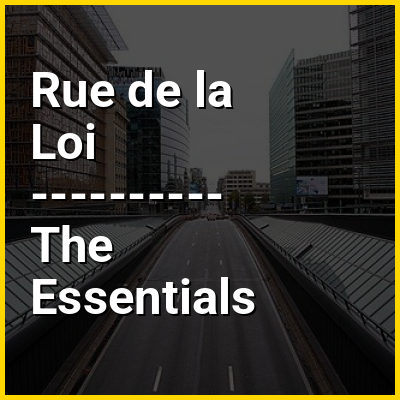
The Rue de la Loi (French, pronounced [ʁy d(ə) la lwa]) or Wetstraat (Dutch, pronounced [ˈʋɛtstraːt]), meaning "Law Street", is a major street running through central and eastern Brussels, Belgium, which is famous due to the presence of several notable Belgian and European Union (EU) governmental buildings. The road runs from the Rue Royale/Koningsstraat in central Brussels to the Robert Schuman Roundabout in its European Quarter. It forms the first (westerly) part of the N3 road that runs to Aachen, Germany.

The terms Rue de la Loi in French or Wetstraat in Dutch are used metonymically for government in Belgian politics and media because the Belgian Federal Parliament building (Palace of the Nation) stands at the beginning of this street and the office of the Prime Minister is located adjacent to this building, at number 16. It is also where the Council of Ministers holds its meetings.
↓ Menu
HINT:

In this Dossier

Rue de la Loi in the context of Berlaymont building

The Berlaymont building (French pronunciation: [bɛʁlɛmɔ̃]) is an office building in Brussels, Belgium, which houses the headquarters of the European Commission, the executive branch of the European Union (EU). The structure is located on the Robert Schuman Roundabout at 200, rue de la Loi/Wetstraat, in the European Quarter. The unique form of the Berlaymont's architecture is used in the European Commission's official emblem. The building is named after the former Convent of the Ladies of Berlaymont [fr], which occupied the site.

View the full Wikipedia page for Berlaymont building
↑ Return to Menu

Rue de la Loi in the context of Robert Schuman Roundabout

The Robert Schuman Roundabout (French: Rond-point Robert Schuman; Dutch: Robert Schumanplein), usually shortened to the Schuman Roundabout, and sometimes called Robert Schuman Square, is a roundabout in the European Quarter of Brussels, Belgium. It lies at the end of the Rue de la Loi/Wetstraat and serves as a focus for major institutions of the European Union (EU). It is named after Robert Schuman, one of the founding fathers of the European Union, the Council of Europe and NATO, and gives its name to the surrounding district (also known as the European Quarter) and Brussels-Schuman railway station.

View the full Wikipedia page for Robert Schuman Roundabout
↑ Return to Menu

Rue de la Loi in the context of Europa building

The Europa building is the seat of the European Council and Council of the European Union, located on the Rue de la Loi/Wetstraat in the European Quarter of Brussels, Belgium. Its defining feature is the multi-storey "lantern-shaped" construct holding the main meeting rooms; a representation of which has been adopted by both the European Council and Council of the EU as their official emblems.

The Europa building is situated on the former site of the partially demolished and renovated Bloc A of the Résidence Palace, a complex of luxurious apartment blocks. Its exterior combines the listed Art Deco façade of the original 1920s building with the contemporary design of the architect Philippe Samyn. The building is linked via two skyways and a service tunnel to the adjacent Justus Lipsius building, which provides for additional office space, meeting rooms and press facilities.

View the full Wikipedia page for Europa building
↑ Return to Menu

Rue de la Loi in the context of Arcade du Cinquantenaire

The Cinquantenaire Arcade (French: Arcade(s) du Cinquantenaire; Dutch: Arcade(s) van het Jubelpark) is a memorial arcade in the centre of the Parc du Cinquantenaire/Jubelpark in Brussels, Belgium. The centrepiece is a monumental triple arch known as the Cinquantenaire Arch (French: Arc du Cinquantenaire; Dutch: Triomfboog van het Jubelpark). It is topped by a bronze quadriga sculptural group with a female charioteer, representing the Province of Brabant personified raising the national flag.

The monument is oriented facing Brussels' city centre, on one side in the axis of the Rue de la Loi/Wetstraat, which, crossing the Leopold Quarter, ends in the Royal Quarter, seat of the Belgian Parliament, the Belgian Government and the Royal Palace; and on the other side, in the axis of the Avenue de Tervueren/Tervurenlaan, leads to the former Palace of the Colonies, today's Royal Museum for Central Africa, in the suburb of Tervuren. The Cinquantenaire area is served by Brussels-Schuman railway station, as well as by the metro stations Schuman and Merode on lines 1 and 5.

View the full Wikipedia page for Arcade du Cinquantenaire
↑ Return to Menu

Rue de la Loi in the context of Schuman metro station

Schuman (French pronunciation: [ʃuman]) is a Brussels Metro station on lines 1 and 5. It is located under the Rue de la Loi/Wetstraat in the City of Brussels, Belgium. The station received its name from the aboveground Robert Schuman Roundabout, itself named after Robert Schuman, one of the founding fathers of the European Union, the Council of Europe and NATO.

The station opened on 17 December 1969 as a premetro (underground tram) station on the tram line between De Brouckère and Schuman. This station was upgraded to full metro status on 20 September 1976, serving former east–west line 1 (further split in 1982 into former lines 1A and 1B). Then, following the reorganisation of the Brussels Metro on 4 April 2009, it now lies on the joint section of east–west lines 1 and 5.

View the full Wikipedia page for Schuman metro station
↑ Return to Menu

Rue de la Loi in the context of Avenue de Tervueren

The Avenue de Tervueren (French, pronounced [avny tɛʁvyʁœn]) or Tervurenlaan (Dutch, pronounced [tɛrˈvyːrə(n)ˌlaːn]) is a major thoroughfare in Brussels, Belgium. It was originally commissioned by King Leopold II as part of his building campaign, and was finished in 1897, in time for the Brussels International Exhibition of that year.

Geographically, the Avenue de Tervueren forms a continuation of the Rue de la Loi/Wetstraat, which ends at the western end of the Parc du Cinquantenaire/Jubelpark, running from Merode station in the west, connecting with Square Maréchal Montgomery/Maarschalk Montgomeryplein, passing through the municipality of Woluwe-Saint-Pierre and the Ring at Quatre Bras/Vier Armen, and finishing at the park in Tervuren. A tunnel starting just west of the Robert Schuman Roundabout takes the Rue de la Loi's main lane under the Cinquantenaire (with a short uncovered section in the centre of the park), and emerges at Merode as the Avenue de Tervueren's central lane.

View the full Wikipedia page for Avenue de Tervueren
↑ Return to Menu

Rue de la Loi in the context of Arts-Loi metro station

Arts-Loi (French, pronounced [aʁ lwa]) or Kunst-Wet (Dutch, pronounced [kʏnst ʋɛt]) is a Brussels Metro station on lines 1, 2, 5 and 6. It is located in the City of Brussels, Belgium, under the intersection of the Rue de la Loi/Wetstraat (lit.'Law Street') and the Avenue des Arts/Kunstlaan (lit.'Art Avenue'), after which it is named, the latter street being part of the Small Ring (Brussels' inner ring road).

The station's lower level opened on 17 December 1969, under the name Arts/Kunst, as a premetro (underground tram) station on the tram line between De Brouckère and Schuman. Its name was changed to its current form in 1971. This station was upgraded to full metro status on 20 September 1976, serving former east–west line 1 (further split in 1982 into former lines 1A and 1B). The station was extended on 2 October 1988 with the opening of the line 2 station, located on the upper level. Then, following the reorganisation of the Brussels Metro on 4 April 2009, it is served by lines 1, 2, 5 and 6.

View the full Wikipedia page for Arts-Loi metro station
↑ Return to Menu

Rue de la Loi in the context of Maelbeek/Maalbeek metro station

Maelbeek (French, pronounced [malbek, -bɛk] ; former Dutch spelling) or Maalbeek (modern Dutch, pronounced [ˈmaːlbeːk]) is a Brussels Metro station on lines 1 and 5. It is located under the Rue de la Loi/Wetstraat in the City of Brussels, Belgium. The station takes its name from the nearby Maalbeek stream.

The station opened on 17 December 1969 as a premetro (underground tram) station on the tram line between De Brouckère and Schuman. This station was upgraded to full metro status on 20 September 1976, serving former east–west line 1 (further split in 1982 into former lines 1A and 1B). Then, following the reorganisation of the Brussels Metro on 4 April 2009, it now lies on the joint section of east–west lines 1 and 5.

View the full Wikipedia page for Maelbeek/Maalbeek metro station
↑ Return to Menu