Rossano Gospels in the context of "Illustrated manuscript"

Play Trivia Questions online!

or

Skip to study material about Rossano Gospels in the context of "Illustrated manuscript"


⭐ Core Definition: Rossano Gospels

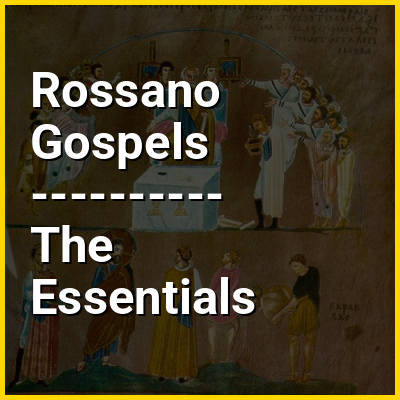
The Rossano Gospels, designated by 042 or Σ (in the Gregory-Aland numbering), ε 18 (Soden), held at the cathedral of Rossano in Italy, is a 6th-century illuminated manuscript Gospel Book written following the reconquest of the Italian peninsula by the Byzantine Empire. Also known as Codex purpureus Rossanensis due to the reddish-purple (purpureus in Latin) appearance of its pages, the codex is one of the oldest surviving illuminated manuscripts of the New Testament. The manuscript is famous for its prefatory cycle of miniatures of subjects from the Life of Christ, arranged in two tiers on the page, sometimes with small Old Testament prophet portraits below, prefiguring and pointing up to events described in the New Testament scene above.

↓ Menu

In this Dossier

Rossano Gospels in the context of Illuminated manuscript

An illuminated manuscript is a formally prepared document where the text is decorated with flourishes such as borders and miniature illustrations. Often used in the Roman Catholic Church for prayers and liturgical books such as psalters and courtly literature, the practice continued into secular texts from the 13th century onward and typically include proclamations, enrolled bills, laws, charters, inventories, and deeds.

The earliest surviving illuminated manuscripts are a small number from late antiquity, and date from between 400 and 600 CE. Examples include the Vergilius Romanus, Vergilius Vaticanus, and the Rossano Gospels. The majority of extant manuscripts are from the Middle Ages, although many survive from the Renaissance. While Islamic manuscripts can also be called illuminated and use essentially the same techniques, comparable Far Eastern and Mesoamerican works are described as painted.

↑ Return to Menu