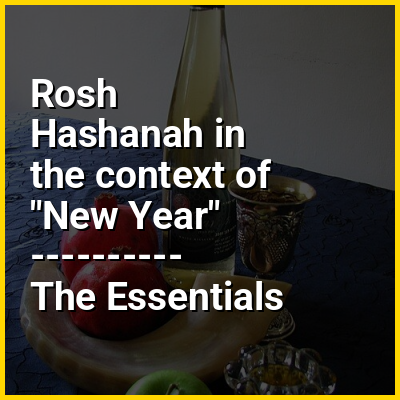
Rosh Hashanah (Hebrew: רֹאשׁ הַשָּׁנָה, pronounced [ˌʁoʃ haʃaˈna]; lit. 'head of the year') is the New Year in Judaism. The biblical name for this holiday is Yom Teruah (יוֹם תְּרוּעָה, Yōm Tərūʿā, IPA: [joːm təruːˈʕaː]; lit. 'day of blasting'). It is the first of the High Holy Days (יָמִים נוֹרָאִים, Yāmīm Nōrāʾīm; lit. 'Days of Awe'), as specified by Leviticus 23:23–25, that occur in the late summer/early autumn of the Northern Hemisphere. Rosh Hashanah begins the Ten Days of Repentance, culminating in Yom Kippur, the day of atonement. It is followed by the festival of Sukkot, which ends with Shemini Atzeret in Israel and Simchat Torah everywhere else.
Rosh Hashanah is a two-day observance and celebration that begins on the first day of Tishrei, which is the seventh month of the ecclesiastical year. The holiday itself follows a lunar calendar and begins the evening prior to the first day. In contrast to the ecclesiastical lunar new year on the first day of the first month Nisan, the spring Passover month which marks Israel's exodus from Egypt, Rosh Hashanah marks the beginning of the civil year, according to the teachings of Judaism, and is the traditional anniversary of the creation of Adam and Eve, the first man and woman according to the Hebrew Bible, as well as the initiation of humanity's role in God's world. The Sages in the Talmud have characterized the day of Rosh Hashanah as the day that we so to speak crown God as king anew each year. This is effectuated through the Shofar blasts which symbolize the horns sounded at a coronation. It also initiates the ten days of repentance making it an opportune time for repentance.