Ronald Ross in the context of Liverpool School of Tropical Medicine


Ronald Ross in the context of Liverpool School of Tropical Medicine

⭐ Core Definition: Ronald Ross

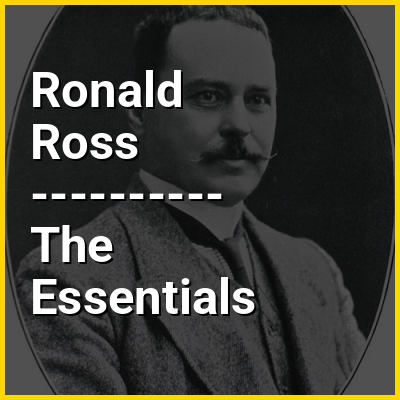
Sir Ronald Ross KCB KCMG FRS FRCS (13 May 1857 – 16 September 1932) was a British medical doctor who received the Nobel Prize for Physiology or Medicine in 1902 for his work on the transmission of malaria, becoming the first British Nobel laureate, and the first born outside Europe. His discovery of the malarial parasite in the gastrointestinal tract of a mosquito in 1897 proved that malaria was transmitted by mosquitoes, and laid the foundation for the method of combating the disease.

Ross was a polymath, writing a number of poems, publishing several novels, and composing songs. He was also an amateur artist and mathematician. He worked in the Indian Medical Service for 25 years. It was during his service that he made the groundbreaking medical discovery. After resigning from his service in India, he joined the faculty of Liverpool School of Tropical Medicine, and continued as Professor and Chairman of Tropical Medicine of the institute for 10 years. In 1926, he became Director-in-Chief of the Ross Institute and Hospital for Tropical Diseases, which was established in honour of his works. He remained there until his death.
↓ Menu
HINT:

In this Dossier

Ronald Ross in the context of Vector (epidemiology)

In epidemiology, a disease vector is any living agent that carries and transmits an infectious pathogen such as a parasite or microbe, to another living organism. Agents regarded as vectors are mostly blood-sucking (hematophagous) arthropods such as mosquitoes. The first major discovery of a disease vector came from Ronald Ross in 1897, who discovered the malaria pathogen when he dissected the stomach tissue of a mosquito.The process of proving that a vector is responsible for transmitting pathogens is called vector incrimination.

View the full Wikipedia page for Vector (epidemiology)
↑ Return to Menu

Ronald Ross in the context of Plasmodium falciparum

Plasmodium falciparum is a unicellular protozoan parasite of humans and is the deadliest species of Plasmodium that causes malaria in humans. The parasite is transmitted through the bite of a female Anopheles mosquito and causes the disease's most dangerous form, falciparum malaria. P. falciparum is therefore regarded as the deadliest parasite in humans. It is also associated with the development of blood cancer (Burkitt's lymphoma) and is classified as a Group 2A (probable) carcinogen.

The species originated from the malarial parasite Laverania found in gorillas, around 10,000 years ago. Alphonse Laveran was the first to identify the parasite in 1880, and named it Oscillaria malariae. Ronald Ross discovered its transmission by mosquito in 1897. Giovanni Battista Grassi elucidated the complete transmission from a female anopheline mosquito to humans in 1898. In 1897, William H. Welch created the name Plasmodium falciparum, which ICZN formally adopted in 1954. P. falciparum assumes several different forms during its life cycle. The human-infective stage are sporozoites from the salivary gland of a mosquito. The sporozoites grow and multiply in the liver to become merozoites. These merozoites invade the erythrocytes (red blood cells) to form trophozoites, schizonts and gametocytes, during which the symptoms of malaria are produced. In the mosquito, the gametocytes undergo sexual reproduction to a zygote, which turns into ookinete. Ookinete forms oocytes from which sporozoites are formed.

View the full Wikipedia page for Plasmodium falciparum
↑ Return to Menu

Ronald Ross in the context of Indian Medical Service

The Indian Medical Service (IMS) was a military medical service in British India, which also had some civilian functions. It served during the two World Wars, and remained in existence until the independence of India in 1947. Many of its officers, who were both British and Indian, served in civilian hospitals.

Among its notable ranks, the IMS had Sir Ronald Ross, a Nobel Prize winner, Sir Benjamin Franklin, later honorary physician to three British monarchs and Henry Vandyke Carter, best known for his illustrations in the anatomy textbook Gray's Anatomy.

View the full Wikipedia page for Indian Medical Service
↑ Return to Menu