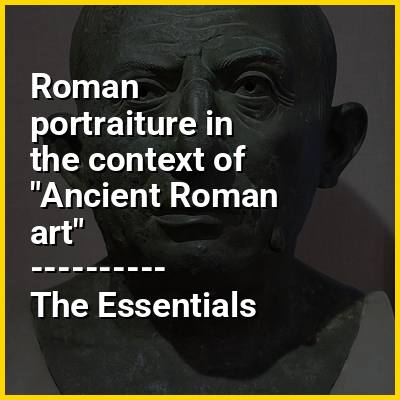
Roman portraiture was one of the most significant periods in the development of portrait art. The surviving portraits of individuals are almost entirely sculptures, covering a period of almost five centuries. Roman portraiture is characterised by unusual realism and the desire to convey images of nature in the high quality style often seen in ancient Roman art. Some busts even seem to show clinical signs. Several images and statues made in marble and bronze have survived in small numbers. Roman funerary art includes many portraits such as married couple funerary reliefs, which were most often made for wealthy freedmen rather than the patrician elite.
Portrait sculpture from the Republican era tends to be somewhat more modest, realistic, and natural compared to early Imperial works. A typical work might be one like the standing figure "A Roman Patrician with Busts of His Ancestors" (c. 30 B.C.).