Republic of Chile in the context of "Juan Fernández Islands"

Play Trivia Questions online!

or

Skip to study material about Republic of Chile in the context of "Juan Fernández Islands"


⭐ Core Definition: Republic of Chile

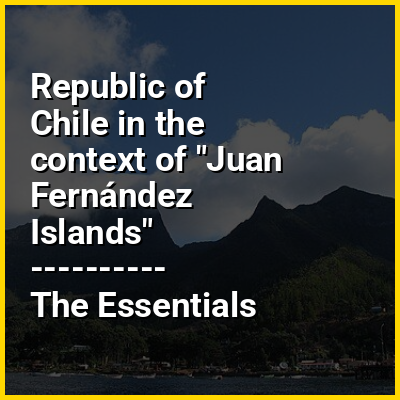
Chile, officially the Republic of Chile, is a country in western South America. It is the southernmost country in the world and the closest to Antarctica, extending along a narrow strip of land between the Andes Mountains and the Pacific Ocean. According to the 2024 census, Chile had an enumerated population of 18.5 million. The country covers a territorial area of 756,102 square kilometers (291,933 sq mi), sharing borders with Peru to the north, Bolivia to the northeast, Argentina to the east, and the Drake Passage to the south. It also administers several Pacific islands, including Juan Fernández, Isla Salas y Gómez, Desventuradas, and Easter Island, and claims about 1,250,000 square kilometers (480,000 sq mi) of Antarctica as the Chilean Antarctic Territory. The capital and largest city is Santiago, and the national language is Spanish.

Spain conquered and colonized the region in the mid-16th century, replacing Inca rule; however, they failed to conquer the autonomous tribal Mapuche people who inhabited what is now south-central Chile. Chile emerged as a relatively stable authoritarian republic in the 1830s after their 1818 declaration of independence from Spain. During the 19th century, Chile experienced significant economic and territorial growth, putting an end to Mapuche resistance in the 1880s and gaining its current northern territory in the War of the Pacific (1879–83) by defeating Peru and Bolivia.
↓ Menu

In this Dossier

Republic of Chile in the context of La Moneda Palace

Palacio de La Moneda (Spanish: [paˈlasjo ðe la moˈneða], Palace of the Mint), or simply La Moneda, is the seat of the president of the Republic of Chile. It also houses the offices of three cabinet ministers: Interior, General Secretariat of the Presidency, and General Secretariat of the Government. Located in downtown Santiago, it occupies an entire block in the Civic District, bordered by Moneda street to the north, Morandé street to the east, Alameda del Libertador Bernardo O'Higgins to the south, and Teatinos street to the west.

↑ Return to Menu

Republic of Chile in the context of President of Chile

The president of Chile (Spanish: Presidente de Chile), officially the president of the Republic of Chile (Spanish: Presidente de la República de Chile), is the head of state and head of government of the Republic of Chile. The president is responsible for both government administration and state administration. Although its role and significance have changed over time, and its position and relations with other actors in the national political organization have also evolved, it remains one of the most prominent political offices in the country. It is also considered one of the key institutions that form the "Historic Constitution of Chile," and is crucial to the country's political stability.

Under the current Constitution, adopted in 1980, the president serves a four-year term and is not eligible for immediate re-election. The shorter term (previously it was six years) allows for synchronized parliamentary and presidential elections. The president's official seat is the La Moneda Palace in the capital Santiago.

↑ Return to Menu

Republic of Chile in the context of La Frontera, Chile

La Frontera in Chile is the region around the Bío Bío River, or the whole area between it and the Toltén River. The use of this latter definition is largely coterminous with the historical usage of Araucanía. The term was coined during the period when the region was the frontier of the Captaincy General of Chile, then a part of the Spanish Empire and later the Republic of Chile, with the Mapuche people inhabiting the Araucanía following their revolt in 1598. Subsequently, the Spanish Empire established a system of forts between the Bío Bío River and the Itata River, as well as some within the Araucanía. This system continued through the 18th century and into the 19th century.

↑ Return to Menu