Reichsautobahn in the context of "Controlled-access highway"

Play Trivia Questions online!

or

Skip to study material about Reichsautobahn in the context of "Controlled-access highway"

Ad spacer

⭐ Core Definition: Reichsautobahn

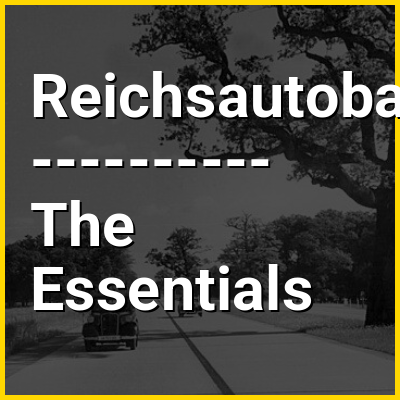
The Reichsautobahn system was the beginning of the German autobahns under Nazi Germany. There had been previous plans for controlled-access highways in Germany under the Weimar Republic, and two had been constructed, but work had yet to start on long-distance highways. After previously opposing plans for a highway network, the Nazis embraced them after coming to power and presented the project as Hitler's own idea. They were termed "The Fuehrer's roads" ("German: Straßen des Führers") and presented as a major contribution to the reduction of unemployment. Other reasons for the project included enabling Germans to explore and appreciate their country, and there was a strong aesthetic element to the execution of the project under the Third Reich; military applications, although to a lesser extent than has often been thought; a permanent monument to the Third Reich, often compared to the pyramids; and general promotion of motoring as a modernization that in itself had military applications.

Hitler turned the first sod on 23 September 1933, at Frankfurt, and work officially began simultaneously at multiple sites throughout the Reich the following spring. The first finished stretch, between Frankfurt and Darmstadt, opened on 19 May 1935, and the first 1,000 km (620 mi) were completed on 23 September 1936. After the annexation of Austria, the planned network was expanded to include the Ostmark, and a second soil-breaking ceremony for the first Reichsautobahn on formerly Austrian territory took place near Salzburg on 7 April 1938. When work ceased in 1941 because of World War II, 3,819.7 km (2,373.5 mi) had been completed.
↓ Menu

>>>PUT SHARE BUTTONS HERE<<<
In this Dossier

Reichsautobahn in the context of Nazi Germany

Nazi Germany, officially the German Reich and later the Greater German Reich, was the German state between 1933 and 1945, when Adolf Hitler and the Nazi Party controlled the country, transforming it into a totalitarian dictatorship. The Third Reich, meaning "Third Realm" or "Third Empire", referred to the Nazi claim that Nazi Germany was the successor to the earlier Holy Roman Empire (800–1806) and German Empire (1871–1918). The Third Reich, which the Nazis referred to as the Thousand-Year Reich, ended in May 1945, after 12 years, when the Allies defeated Germany and entered the capital, Berlin, ending World War II in Europe.

After Hitler was appointed Chancellor of Germany in 1933, the Nazi Party began to eliminate political opposition and consolidate power. A 1934 German referendum confirmed Hitler as sole Führer (leader). Power was centralised in Hitler's person, and his word became the highest law. The government was not a co-ordinated, cooperating body, but rather a collection of factions struggling to amass power. To address the Great Depression, the Nazis used heavy military spending, extensive public works projects, including the Autobahnen (motorways) and a massive secret rearmament program, forming the Wehrmacht (armed forces), all financed by deficit spending. The return to economic stability and end of mass unemployment boosted the regime's popularity. Hitler made increasingly aggressive territorial demands, seizing Austria in the Anschluss of 1938, and the Sudetenland region of Czechoslovakia. Germany signed a non-aggression pact with the Soviet Union and invaded Poland in 1939, launching World War II in Europe. In alliance with Fascist Italy and other Axis powers, Germany conquered most of Europe by 1940 and threatened Britain.

↑ Return to Menu

Reichsautobahn in the context of Volkswagen Beetle

The Volkswagen Beetle, officially the Volkswagen Type 1, is a small family car produced by the German company Volkswagen from 1938 to 2003. A global cultural icon known for its bug-like design, the Beetle is widely regarded as one of the most influential cars of the 20th century. Its production period of 65 years is the longest for any single generation of automobile, and its total production of 21.5 million units makes it the most produced car of a single platform in history and the second-highest of all nameplates manufactured in the 20th century.

The Beetle was conceived in the early 1930s. The leader of Nazi Germany, Adolf Hitler, decided there was a need for a people's car—an inexpensive, simple, mass-produced car—to serve Germany's new road network, the Reichsautobahn. The German engineer Ferdinand Porsche and his design team began developing and designing the car in the early 1930s, but the fundamental design concept can be attributed to Béla Barényi in 1925, predating Porsche's claims by almost ten years. The result was the Volkswagen Type 1 and the introduction of the Volkswagen brand. Volkswagen initially slated production for the late 1930s, but the outbreak of war in 1939 meant that production was delayed until the war had ended. The car was originally called the Volkswagen Type 1 and marketed simply as the Volkswagen. It was not until 1968 that it was officially named the "Beetle".

↑ Return to Menu

Reichsautobahn in the context of Nazi German

Nazi Germany, officially the German Reich and later the Greater German Reich, was the German state between 1933 and 1945, when Adolf Hitler and the Nazi Party controlled the country, transforming it into a totalitarian dictatorship. The Third Reich, meaning "Third Realm" or "Third Empire", referred to the Nazi claim that Nazi Germany was the successor to the earlier Holy Roman Empire (800–1806) and German Empire (1871–1918). The Third Reich, which the Nazis referred to as the Thousand-Year Reich, ended in May 1945, after 12 years, when the Allies defeated Germany and entered the capital, Berlin, ending World War II in Europe.

After Hitler was appointed Chancellor of Germany in 1933, the Nazi Party began to eliminate political opposition and consolidate power. A 1934 German referendum confirmed Hitler as sole Führer (leader). Power was centralised in Hitler's person, and his word became the highest law. The government was not a co-ordinated, co-operating body, but rather a collection of factions struggling to amass power. To address the Great Depression, the Nazis used heavy military spending, extensive public works projects, including the Autobahnen (motorways) and a massive secret rearmament programme, forming the Wehrmacht (armed forces), all financed by deficit spending. The return to economic stability and end of mass unemployment boosted the regime's popularity. Hitler made increasingly aggressive territorial demands, seizing Austria in the Anschluss of 1938, and the Sudetenland region of Czechoslovakia. Germany signed a non-aggression pact with the Soviet Union and invaded Poland in 1939, launching World War II in Europe. In alliance with Fascist Italy and other Axis powers, Germany conquered most of Europe by 1940 and threatened Britain.

↑ Return to Menu

Reichsautobahn in the context of Nazi regime

Nazi Germany, officially the German Reich and later the Greater German Reich, was the German state between 1933 and 1945, when Adolf Hitler and the Nazi Party controlled the country, transforming it into a totalitarian dictatorship. The Third Reich, meaning "Third Realm" or "Third Empire", referred to the Nazi claim that Nazi Germany was the successor to the Holy Roman Empire (800–1806) and the German Empire (1871–1918). The Third Reich, which the Nazis referred to as the Thousand-Year Reich, ended in May 1945, after 12 years, when the Allies defeated Germany and entered the capital, Berlin, ending World War II in Europe.

After Hitler was appointed Chancellor of Germany in 1933, the Nazi Party began to eliminate political opposition and consolidate power. A 1934 German referendum confirmed Hitler as sole Führer (leader). Power was centralised in Hitler's person, and his word became the highest law. The government was not a co-ordinated, co-operating body, but rather a collection of factions struggling to amass power. To address the Great Depression, the Nazis used heavy military spending, extensive public works projects, including the Autobahnen (motorways) and a massive secret rearmament programme, forming the Wehrmacht (armed forces), all financed by deficit spending. The return to economic stability and end of mass unemployment boosted the regime's popularity. Hitler made increasingly aggressive territorial demands, seizing Austria in the Anschluss of 1938, and the Sudetenland region of Czechoslovakia. Germany signed a non-aggression pact with the Soviet Union and invaded Poland in 1939, launching World War II in Europe. In alliance with Fascist Italy and other Axis powers, Germany conquered most of Europe by 1940 and threatened Britain.

↑ Return to Menu