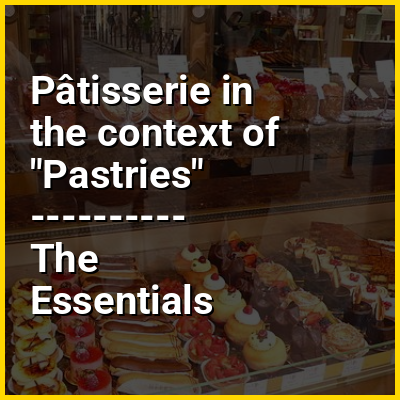
Pastry refers to a variety of doughs (often enriched with fat or eggs), as well as the sweet and savoury baked goods made from them. The dough may be accordingly called pastry dough for clarity. Sweetened pastries are often described as baker's confectionery. Common pastry dishes include pies, tarts, quiches, croissants, and turnovers.
The French word pâtisserie is also used in English (with or without the accent) for many of the same foods, as well as the set of techniques used to make them. Originally, the French word pastisserie referred to anything, such as a meat pie, made in dough (paste, later pâte) and not typically a luxurious or sweet product. This meaning still persisted in the nineteenth century, though by then the term more often referred to the sweet and often ornate confections implied today.