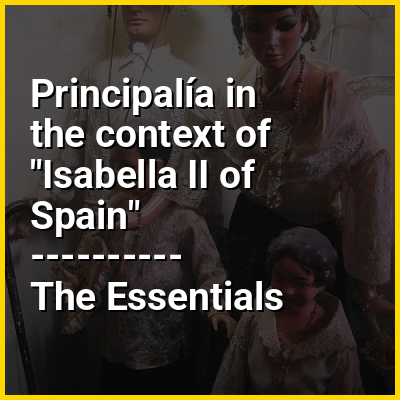
The principalía or noble class was the ruling and usually educated upper class in the pueblos of Spanish Philippines, comprising the gobernadorcillo (later called the capitán municipal and had functions similar to a town mayor), tenientes de justicia (lieutenants of justice), and the cabezas de barangay (heads of the barangays) who governed the districts. Also included in this class were former gobernadorcillos or municipal captains, and municipal lieutenants in good standing during their term of office.
The distinction or status of being part of the principalía was originally a hereditary right. However, a royal decree dated December 20, 1863 (signed in the name of Queen Isabella II by the Minister of the Colonies, José de la Concha), made possible the creation of new principales under certain defined criteria, among which was proficiency in the Castilian language. Later, wider conditions that defined the principalía were stipulated in the norms provided by the Maura Law of 1893, which was in force until Spain lost the Philippines to the United States in 1898. The Maura Law also redefined the title of the head of municipal government from gobernadorcillo to capitán municipal, and extended the distinction as principales to citizens paying 50 pesos in land tax.