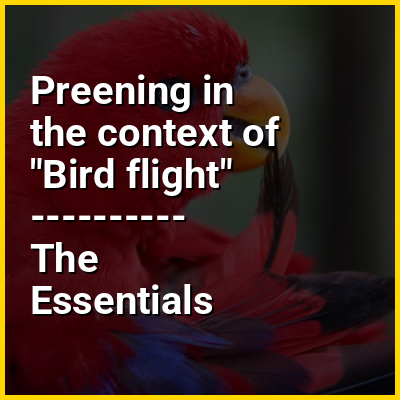
Preening is a maintenance behaviour found in birds that involves the use of the beak to position feathers, interlock feather barbules that have become separated, clean plumage, and keep ectoparasites in check. Feathers contribute significantly to a bird's insulation, waterproofing and aerodynamic flight, and so are vital to its survival. Because of this, birds spend considerable time each day maintaining their feathers, primarily through preening. Several actions make up preening behaviour. Birds fluff up and shake their feathers, which helps to "rezip" feather barbules that have become unhooked. Using their beaks, they gather preen oil from a gland at the base of their tail and distribute this oil through their feathers. They draw each contour feather through their bill, nibbling it from base to tip.
Over time, some elements of preening have evolved to have secondary functions. Ritualised preening has become a part of some courtship displays, for example. It is also a displacement activity that can occur when birds are subjected to two conflicting drives. Though primarily an individual function, preening can be a social activity involving two or more birds – a behaviour known as allopreening. In general, allopreening occurs either between two members of a mated pair or between flock members in a social species. Such behaviour may assist in effective grooming, in the recognition of individuals (mates or potential sexual partners), or in reducing or redirecting potential aggressive tendencies in social species. Most allopreening is confined to the head and neck, smaller efforts being directed towards other parts of the body.