The modern history of Russia began with the Russian SFSR, a constituent republic of the Soviet Union, gaining more political and economical autonomy amidst the imminent dissolution of the USSR during 1988–1991, proclaiming its sovereignty inside the Union in June 1990, and electing its first President Boris Yeltsin a year later. The Russian Soviet Federative Socialist Republic was the largest Soviet Socialist Republic, but it had no significant independence before, being the only Soviet republic to not have its own branch of the Communist Party.
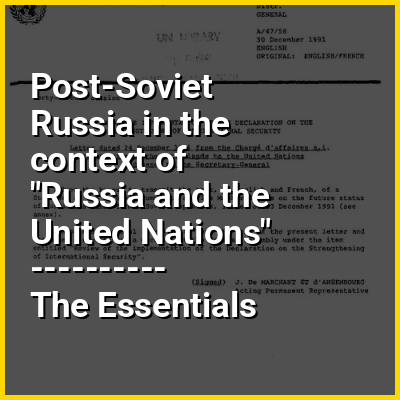
The RSFSR was the largest of the fifteen republics that made up the USSR, accounting for over 60% of its GDP and over 50% of its population. Russians also dominated the Soviet military and the Communist Party. As such, the Russian Federation was widely accepted as the USSR's successor state in diplomatic affairs and it assumed the USSR's permanent membership and veto in the UN Security Council (see Russia and the United Nations).