Picasso's Rose Period in the context of Iberian sculpture


Picasso's Rose Period in the context of Iberian sculpture

⭐ Core Definition: Picasso's Rose Period

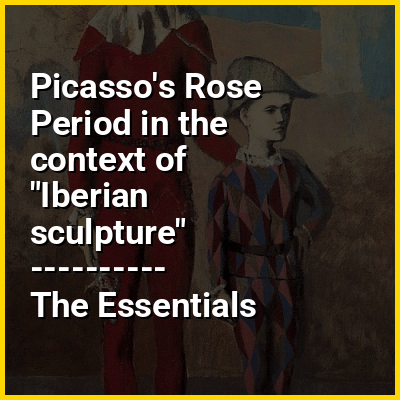
The Rose Period (Spanish: Período rosa) comprises the works produced by Spanish painter Pablo Picasso between 1904 and 1906. It began when Picasso settled in Montmartre at the Bateau-Lavoir among Bohemian poets and writers. Following his Blue Period – which depicted themes of poverty, loneliness, and despair in somber, blue tones – Picasso's Rose Period represents more pleasant themes of clowns, harlequins and carnival performers, depicted in cheerful vivid hues of red, orange, pink and earth tones.

Based largely on intuition rather than direct observation, Picasso's Rose Period marks the beginning of the artist's stylistic experiments with primitivism; influenced by pre-Roman Iberian sculpture, Oceanic and African art. This led to Picasso's African Period in 1907, culminating in the Proto-Cubist Les Demoiselles d'Avignon, regarded as a masterpiece.
↓ Menu
HINT:

In this Dossier

Picasso's Rose Period in the context of Picasso's African Period

Picasso's African Period, which lasted from 1906 to 1909, was the period when Pablo Picasso painted in a style which was strongly influenced by African sculpture, particularly traditional African masks and art of ancient Egypt, in addition to non-African influences including Iberian sculpture, and the art of Paul Cézanne and El Greco. This proto-Cubist period following Picasso's Blue Period and Rose Period has also been called the Negro Period, or Black Period. Picasso collected and drew inspiration from African art during this period, but also for many years after it.

View the full Wikipedia page for Picasso's African Period
↑ Return to Menu