Philip J. Currie in the context of "University of Alberta"

Play Trivia Questions online!

or

Skip to study material about Philip J. Currie in the context of "University of Alberta"


⭐ Core Definition: Philip J. Currie

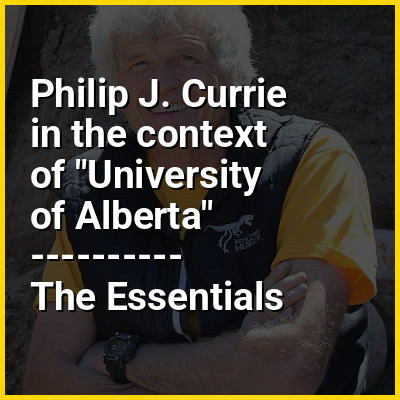
Philip John Currie AOE FRSC FRCGS (born March 13, 1949) is a Canadian palaeontologist and museum curator who helped found the Royal Tyrrell Museum of Palaeontology in Drumheller, Alberta and is now a professor at the University of Alberta in Edmonton. In the 1980s, he became the director of the Canada-China Dinosaur Project, the first cooperative palaeontological partnering between China and the West since the Central Asiatic Expeditions in the 1920s, and helped describe some of the first feathered dinosaurs. He is one of the primary editors of the influential Encyclopedia of Dinosaurs, and his areas of expertise include theropods (especially Tyrannosauridae), the origin of birds, and dinosaurian migration patterns and herding behavior. He was one of the models for palaeontologist Alan Grant in the film Jurassic Park.

↓ Menu

In this Dossier

Philip J. Currie in the context of Fellow of the Royal Society of Canada

Fellowship of the Royal Society of Canada (FRSC) is an award granted to individuals that the Royal Society of Canada judges to have "made remarkable contributions in the arts, the humanities and the sciences, as well as in Canadian public life". As of 2020, there are more than 2,000 living Canadian fellows, including scholars, artists, and scientists such as Margaret Atwood, Philip J. Currie, David Suzuki, Brenda Milner, and Demetri Terzopoulos. There are four types of fellowship:

  1. Honorary fellows (a title of honour)
  2. Regularly elected fellows
  3. Specially elected fellows
  4. Foreign fellows (neither residents nor citizens of Canada)
↑ Return to Menu