Peanut oil in the context of "Oilseed"

Play Trivia Questions online!

or

Skip to study material about Peanut oil in the context of "Oilseed"


⭐ Core Definition: Peanut oil

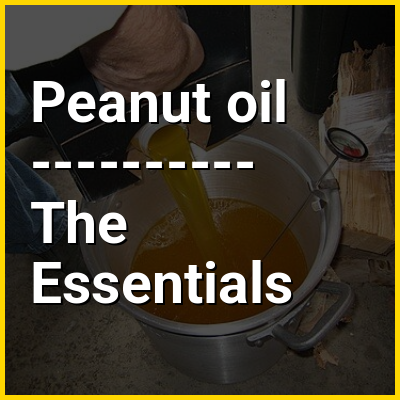
Peanut oil, also known as groundnut oil or arachis oil, is a vegetable oil derived from peanuts. The oil usually has a mild or neutral flavor but, if made with roasted peanuts, has a stronger peanut flavor and aroma. It is often used in American, Chinese, Indian, African and Southeast Asian cuisine, both for general cooking and in the case of roasted oil, for added flavor. Peanut oil has a high smoke point relative to many other cooking oils, so it is commonly used for frying foods.

↓ Menu

In this Dossier

Peanut oil in the context of Vegetable oil

Vegetable oils, or vegetable fats, are oils extracted from seeds or from other parts of edible plants. Like animal fats, vegetable fats are mixtures of triglycerides. Soybean oil, grape seed oil, and cocoa butter are examples of seed oils, or fats from seeds. Olive oil, palm oil, and rice bran oil are examples of fats from other parts of plants. In common usage, vegetable oil may refer exclusively to vegetable fats which are liquid at room temperature. Vegetable oils are usually edible.

↑ Return to Menu

Peanut oil in the context of Peanut

The peanut (Arachis hypogaea), also known as the groundnut, goober (US), goober pea, pindar (US) or monkey nut (UK), is a legume crop grown mainly for its edible seeds, contained in underground pods. It is widely grown in the tropics and subtropics by small and large commercial producers, both as a grain legume and as an oil crop. Geocarpy is atypical among legumes, which led botanist Carl Linnaeus to name the species hypogaea, from Greek 'under the earth'.

The peanut belongs to the botanical family Fabaceae (or Leguminosae), commonly known as the legume, bean, or pea family. Like most other legumes, peanuts harbor symbiotic nitrogen-fixing bacteria in root nodules, which improve soil fertility, making them valuable in crop rotations.

↑ Return to Menu

Peanut oil in the context of Poppyseed oil

Poppyseed oil (also poppy seed oil and poppy oil) is an edible oil obtained from poppy seeds (specifically seeds of Papaver somniferum, the opium poppy).

Poppy seeds yield 45–50% oil. Like poppy seeds, poppyseed oil is highly palatable, high in vitamin E, and has no narcotic properties. Poppy seeds are especially high in tocopherols other than vitamin E (alpha-tocopherol). Compared to other vegetable oils, poppyseed oil has a moderate amount of phytosterols: higher than soybean oil and peanut oil, lower than safflower oil, sesame oil, wheat germ oil, corn oil, and rice bran oil. It has little or no odor and a pleasant taste, and it is less likely than some other oils to become rancid.

↑ Return to Menu

Peanut oil in the context of Textured vegetable protein

Textured or texturized vegetable protein (TVP), also known as textured soy protein (TSP), soy meat, or soya chunks, is a defatted soy flour product, a by-product of extracting soybean oil. It is often used as a meat analogue or meat extender. It is quick to cook, with a protein content comparable to some animal-derived meats.

TVP may be produced from any protein-rich seed meal left over from vegetable oil production. Specifically, a wide range of pulse seeds besides soybean, including lentils, peas, and faba beans, may be used for TVP production. Peanut-based TVP is produced in China where peanut oil is a popular cooking oil.

↑ Return to Menu

Peanut oil in the context of Press cake

A press cake or oil cake is the solid matter remaining after pressing something to extract the liquids. Their most common use is in animal feed.

Some foods whose processing creates press cakes are olives for olive oil (pomace), peanuts for peanut oil, coconut flesh for coconut cream and milk (sapal), grapes for wine (pomace), apples for cider (pomace), mustard cake, and soybeans for soy milk (used to make tofu) (this is called soy pulp) or oil. Other common press cakes come from flax seed (linseed), cottonseed, and sunflower seeds. However, some specific kinds may be toxic, and are rather used as fertilizer; for example, cottonseed contains a toxic pigment, gossypol, that must be removed before processing.

↑ Return to Menu