Peanut in the context of "Pea"

Play Trivia Questions online!

or

Skip to study material about Peanut in the context of "Pea"

Ad spacer

⭐ Core Definition: Peanut

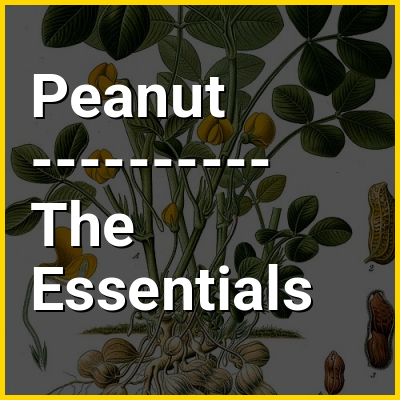
The peanut (Arachis hypogaea), also known as the groundnut, goober (US), goober pea, pindar (US) or monkey nut (UK), is a legume crop grown mainly for its edible seeds, contained in underground pods. It is widely grown in the tropics and subtropics by small and large commercial producers, both as a grain legume and as an oil crop. Geocarpy is atypical among legumes, which led botanist Carl Linnaeus to name the species hypogaea, from Greek 'under the earth'.

The peanut belongs to the botanical family Fabaceae (or Leguminosae), commonly known as the legume, bean, or pea family. Like most other legumes, peanuts harbor symbiotic nitrogen-fixing bacteria in root nodules, which improve soil fertility, making them valuable in crop rotations.
↓ Menu

>>>PUT SHARE BUTTONS HERE<<<
In this Dossier

Peanut in the context of Andean civilizations

The Andean civilizations were South American complex societies of many indigenous people. They stretched down the spine of the Andes for 4,000 km (2,500 miles) from southern Colombia, to Ecuador and Peru, including the deserts of coastal Peru, to north Chile and northwest Argentina. Archaeologists believe that Andean civilizations first developed on the narrow coastal plain of the Pacific Ocean. The Caral or Norte Chico civilization of coastal Peru is the oldest known civilization in the Americas, dating back to 3500 BCE. Andean civilizations are one of at least five civilizations in the world deemed by scholars to be "pristine." The concept of a "pristine" civilization refers to a civilization that has developed independently of external influences and is not a derivative of other civilizations.

Despite the severe environmental challenges of high mountains and hyper-arid desert, the Andean civilizations domesticated a wide variety of crops, some of which, such as potatoes, peppers, peanuts, manioc, chocolate, and coca, became of worldwide importance. The Andean civilizations were noteworthy for monumental architecture, an extensive road system, textile weaving, and many unique characteristics of the societies they created.

↑ Return to Menu

Peanut in the context of Peanut oil

Peanut oil, also known as groundnut oil or arachis oil, is a vegetable oil derived from peanuts. The oil usually has a mild or neutral flavor but, if made with roasted peanuts, has a stronger peanut flavor and aroma. It is often used in American, Chinese, Indian, African and Southeast Asian cuisine, both for general cooking and in the case of roasted oil, for added flavor. Peanut oil has a high smoke point relative to many other cooking oils, so it is commonly used for frying foods.

↑ Return to Menu

Peanut in the context of Food allergy

A food allergy is an abnormal immune response to food. The symptoms of the allergic reaction may range from mild to severe. They may include itchiness, swelling of the tongue, vomiting, diarrhea, hives, trouble breathing, or low blood pressure. This typically occurs within minutes to several hours of exposure. When the symptoms are severe, it is known as anaphylaxis. A food intolerance and food poisoning are separate conditions, not due to an immune response.

Common foods involved include cow's milk, peanuts, eggs, shellfish, fish, tree nuts, soy, wheat, and sesame. The common allergies vary depending on the country. Risk factors include a family history of allergies, vitamin D deficiency, obesity, and high levels of cleanliness. Allergies occur when immunoglobulin E (IgE), part of the body's immune system, binds to food molecules. A protein in the food is usually the problem. This triggers the release of inflammatory chemicals such as histamine. Diagnosis is usually based on a medical history, elimination diet, skin prick test, blood tests for food-specific IgE antibodies, or oral food challenge.

↑ Return to Menu

Peanut in the context of Bar (establishment)

A bar, also known as a saloon, a tavern or tippling house, or sometimes as a pub or club, is a retail business that serves alcoholic beverages, such as beer, wine, liquor, cocktails, and other beverages such as mineral water and soft drinks. Bars often also sell snack foods, such as chips (crisps) or peanuts, for consumption on their premises. Some types of bars, such as pubs, may also serve food from a restaurant menu. The term "bar" refers both to the countertop where drinks are prepared and served and also by extension to the entirety of the establishment in which the bar is located.

The term derives from the metal or wooden bar (barrier) that is often located along the length of the "bar". Over many years, heights of bars were lowered, and high stools added, and the brass bar remains today.

↑ Return to Menu

Peanut in the context of Postharvest

In agriculture, postharvest handling is the stage of crop production immediately following harvest, including cooling, cleaning, sorting and packing. The instant a crop is removed from the ground, or separated from its parent plant, it begins to deteriorate. Postharvest treatment largely determines final quality, whether a crop is sold for fresh consumption, or used as an ingredient in a processed food product.

↑ Return to Menu

Peanut in the context of Helmand Province

Helmand (Pashto and Dari: هلمند), known in ancient times as Hermand, Hirmand, and Hethumand, is one of the 34 provinces of Afghanistan, in the south of the country. It is the largest province by area, covering 58,584 square kilometres (20,000 sq mi) area. The province contains 18 districts, encompassing over 1,000 villages, and roughly 1,446,230 settled people. Lashkargah serves as the provincial capital. Helmand was part of the Greater Kandahar region until made into a separate province by the Afghan government in the 20th century. It is largely populated by Pashtuns.

The Helmand River flows through the mainly desert region of the province, providing water used for irrigation. The Kajaki Dam, which is one of Afghanistan's major reservoirs, is located in the Kajaki district. Helmand is believed to be one of the world's largest opium producing regions, responsible for around 42% of the world's total production. This is believed to be more than the whole of Myanmar, which is the second-largest producing nation after Afghanistan. The region also produces tobacco, sugar beets, cotton, sesame, wheat, mung beans, maize, nuts, sunflowers, onions, potato, tomato, cauliflower, peanut, apricot, grape, and melon. The province has a domestic airport (Bost Airport), in the city of Lashkargah that was heavily used by NATO-led forces. The former British Camp Bastion and the U.S. Camp Leatherneck is a short distance southwest of Lashkargah.

↑ Return to Menu

Peanut in the context of Indian cuisine

Indian cuisine consists of a variety of regional and traditional cuisines native to the Indian subcontinent. Given the diversity in soil, climate, culture, ethnic groups, and occupations, these cuisines vary substantially and use locally available ingredients.

Indian food is also heavily influenced by religion, in particular Hinduism and Sikhism, cultural choices and traditions. Historical events such as invasions, trade relations, and colonialism have played a role in introducing certain foods to India. The Columbian discovery of the New World brought a number of new vegetables and fruits. A number of these such as potatoes, tomatoes, chillies, peanuts, and guava have become staples in many regions of India.

↑ Return to Menu

Peanut in the context of List of culinary nuts

A culinary nut is a dry, edible fruit or seed that usually, but not always, has a high fat content. Nuts are used in a wide variety of edible roles, including in baking, as snacks (either roasted or raw), and as flavoring. In addition to botanical nuts, fruits and seeds that have a similar appearance and culinary role are considered to be culinary nuts. Culinary nuts are divided into fruits or seeds in one of four categories:

Nuts have a rich history as food. For many indigenous peoples of the Americas, a wide variety of nuts, including acorns, American beech, and others, served as a major source of starch and fat over thousands of years. Similarly, a wide variety of nuts have served as food for Indigenous Australians for many centuries. Other culinary nuts, though known from ancient times, have seen dramatic increases in use in modern times. The most striking such example is the peanut. Its usage was popularized by the work of George Washington Carver, who discovered and popularized many applications of the peanut after employing peanut plants for soil amelioration in fields used to grow cotton.

↑ Return to Menu

Peanut in the context of Almyros

Almyros or Halmyros (Greek: Αλμυρός, romanizedAlmyrós, lit.'salty') is a town and a municipality of the regional unit of Magnesia, region of Thessaly, Greece. It lies in the center of prosperous fertile plain known as 'Krokio Pedio', which is crossed by torrents. Almyros is an important agricultural and commercial center of Magnesia, and is also developing as a tourist center for the area. The main agricultural products are tomatoes, cotton, wheat, almonds, peanuts and pistachio nuts.

↑ Return to Menu