Paraguaná Peninsula in the context of Bonaire


Paraguaná Peninsula in the context of Bonaire

⭐ Core Definition: Paraguaná Peninsula

12°00′N 70°00′W / 12.000°N 70.000°W / 12.000; -70.000

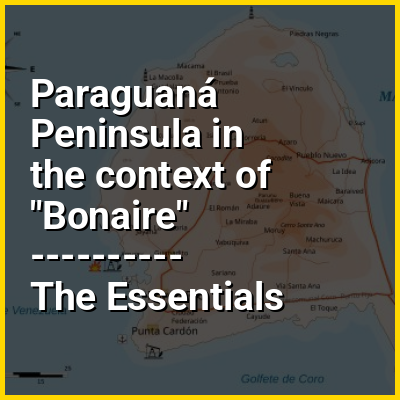
Paraguaná (Spanish pronunciation: [paɾaɣwaˈna]) is a peninsula and tied island in Venezuela, situated in the north of Falcón State, and comprises the municipalities of Carirubana, Los Taques and Falcón. The island of Aruba lies 27 km (17 miles) to the north. Bonaire and Curaçao are slightly further away. Paraguaná lies in the Caribbean Sea, and is connected to the rest of the state by the natural isthmus or tombolo of Médanos.

↓ Menu
HINT:

In this Dossier

Paraguaná Peninsula in the context of Aruba

Aruba, officially the Country of Aruba, is a constituent island country within the Kingdom of the Netherlands, in the southern Caribbean Sea 29 kilometres (18 mi) north of the Venezuelan peninsula of Paraguaná and 80 kilometres (50 mi) northwest of Curaçao. In 1986, Aruba became a constituent country within the Kingdom of the Netherlands and acquired the formal name the Country of Aruba.

Aruba has an area of 179 km (69.1 sq mi). Aruba measures 32 kilometres (20 mi) in length from its northwestern to its southeastern end and is 10 kilometres (6 mi) across at its widest point. Aruba is geologically located in South America, lying on the South American continental shelf. Alongside Bonaire and Curaçao, Aruba forms part of an island group referred to as the ABC islands. The Dutch Caribbean encompasses the ABC islands along with the other three substantial islands, the SSS islands. In contrast to much of the Caribbean, which experiences humid tropical climates, Aruba has a dry climate with an arid xeric landscape. The relatively warm and sunny weather persists throughout the year.

View the full Wikipedia page for Aruba
↑ Return to Menu

Paraguaná Peninsula in the context of Santa Ana de Coro

Coro is the capital of Falcón State and the second oldest city in Venezuela (after Cumaná). It was founded on July 26, 1527, by Juan de Ampíes as Santa Ana de Coro. It was historically known as Neu-Augsburg (from 1528 to 1546) by the German Welsers, and Coro by the Spanish colonizers and Venezuelans, the city and buildings were built during the Spanish Empire. It is established at the south of the Paraguaná Peninsula in a coastal plain, flanked by the Médanos de Coro National Park to the north and the Sierra de Coro to the south, at a few kilometers from its port (La Vela de Coro) in the Caribbean Sea at a point equidistant between the Ensenada de La Vela and Golfete de Coro.

It has a wide cultural tradition that comes from being the urban settlement founded by the Spanish conquerors who colonized the interior of the continent. As Neu-Augsburg, it was the first German colony in the Americas under the Welser family of Augsburg (from 1528 to 1546). It was then the first capital of the Spanish Captaincy General of Venezuela (1546–1578) and head of the first bishop founded in South America in 1531. The precursor movement of the independence and of vindication of the dominated classes in Venezuela originated in this region; it is also considered to be the cradle of the Venezuelan federalist movement in the republican era.

View the full Wikipedia page for Santa Ana de Coro
↑ Return to Menu