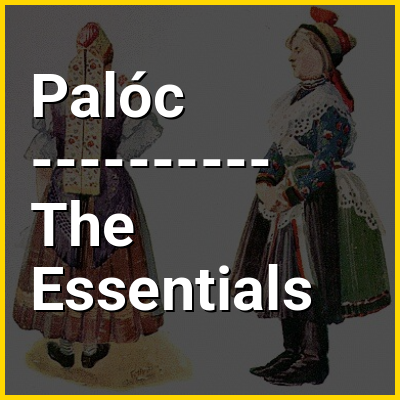
The Palóc [ˈpɒloːt͡s] are a subgroup of Hungarians in Northern Hungary and southern Slovakia. While the Palóc have retained distinctive traditions, including a very divergent dialect of Hungarian, the Palóc are also ethnic Hungarians by general consensus. Although their origins are unclear, the Palóc seem to have some sort of connections with the Khazar, Kabar, Pechenegs, Cuman and especially with the Avar tribes. The writings of Kálmán Mikszáth gave new prominence to the people in 1882 with his work The Good People of Palóc. The Palóc village of Hollókő was proclaimed a UNESCO World Heritage Site in 1987 because of its preservation of traditional Palóc architecture and land use. Two branches of the Palócs can be distinguished based on their place of residence and customs: the western and the eastern (Barkó) Palócs, although the folk customs of both branches are mixed with remnants of ancient inner Asian beliefs and Christianity. They can be further grouped based on their dialect. The residence of the Palócs extends to the often-mentioned Palócföld (Palócland), which used to belong to Hont and Gömör and Kishont counties, and today it covers partly Slovakian and partly Hungarian areas (Pest, Nógrád, Heves, and Borsod-Abaúj-Zemplén counties): Cserhát, Mátra, Bükk mountains and north of these horizontal basin and the Ipoly Valley - nearly 150 settlements.
The Palócs never had special rights, so their first written mention dates only from 1656, when the notary from Nagykőrös recorded the following in his account book: "I bought ten pairs of mother of pearl knives from the Palócs". Their own specific ancient name is "had", which is the name of all the Palócs living in the same community who bear the same surname, even if they are form a separate family.