Pago Pago, American Samoa in the context of "Maoputasi County, American Samoa"

Play Trivia Questions online!

or

Skip to study material about Pago Pago, American Samoa in the context of "Maoputasi County, American Samoa"


⭐ Core Definition: Pago Pago, American Samoa

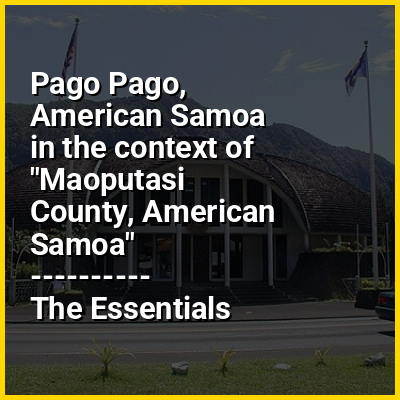
Pago Pago (/ˈpɑːŋˈpɑːŋ/ or /ˈpɑːŋɡˈpɑːŋɡ/ PAHNG-goh-PAHNG-goh; Samoan: Samoan pronunciation: [ˈpaŋo ˈpaŋo] ) is the capital of American Samoa. It is in Maoputasi County on Tutuila, the main island of American Samoa.

Pago Pago is home to one of the deepest natural harbors in the South Pacific Ocean, sheltered from wind and rough seas, and strategically located. The harbor is also one of the best protected in the South Pacific, which gives American Samoa a natural advantage because it makes landing fish for processing easier. Tourism, entertainment, food, and tuna canning are its main industries. As of 1993, Pago Pago was the world's fourth-largest tuna processor. In 2009, the total value of fish landed in Pago Pago—about $200,000,000 annually—is higher than in any other port in any U.S. state or territory. It is home to the largest tuna cannery in the world.
↓ Menu

In this Dossier

Pago Pago, American Samoa in the context of American Samoa

American Samoa is an unincorporated and unorganized territory of the United States located in the Polynesia region of the south Pacific Ocean. Centered on 14°18′S 170°42′W / 14.3°S 170.7°W / -14.3; -170.7, it is 40 miles (64 km) southeast of the island country of Samoa, east of the International Date Line and the Wallis and Futuna Islands, west of the Cook Islands, north of Tonga, and some 310 miles (500 km) south of Tokelau. American Samoa is the southernmost territory of the United States, situated 2,200 miles (3,500 km) southwest of the U.S. state of Hawaii, and one of two U.S. territories south of the Equator, along with the uninhabited Jarvis Island.

American Samoa consists of the eastern part of the Samoan archipelago – the inhabited volcanic islands of Tutuila, Aunuʻu, Ofu, Olosega and Taʻū and the uninhabited Rose Atoll – as well as Swains Island, a remote coral atoll in the Tokelau volcanic island group. The total land area is 77 square miles (199 km), slightly larger than Washington, D.C.; including its territorial waters, the total area is 117,500 square miles (304,000 km), about the size of New Zealand. American Samoa has a tropical climate, with 90 percent of its land covered by rainforests. As of 2024, the population is approximately 47,400 and concentrated on Tutuila, which hosts the capital and largest settlement, Pago Pago. The vast majority of residents are indigenous ethnic Samoans, most of whom are fluent in the official languages, Samoan and English.

↑ Return to Menu