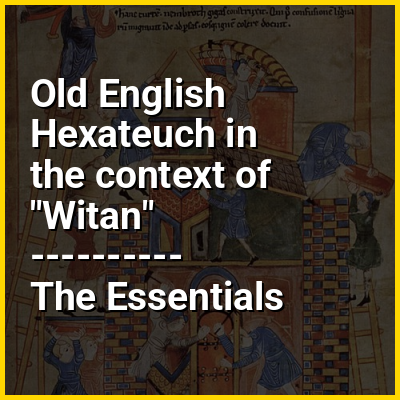
The Old English Hexateuch, or Aelfric Paraphrase, is the collaborative project of the late Anglo-Saxon period that translated the six books of the Hexateuch into Old English, presumably under the editorship of Abbot Ælfric of Eynsham (d. c. 1010). It is the first English vernacular translation of the first six books of the Old Testament, i.e. the five books of the Torah (Genesis, Exodus, Leviticus, Numbers and Deuteronomy) and Joshua. It was probably made for use by lay people.
The translation is known in seven manuscripts, most of which are fragmentary. The best-known of those is a richly illuminated manuscript in the British Library, Cotton MS Claudius B.iv (from which the illustrations on this page are taken). Another copy of the text, without lavish illustrations but including a translation of the Book of Judges (hence also called the Old English Heptateuch), is found in Oxford, Bodleian Library, Laud Misc. 509.