Old City of Sanaa in the context of Jabal Nuqm


Old City of Sanaa in the context of Jabal Nuqm

⭐ Core Definition: Old City of Sanaa

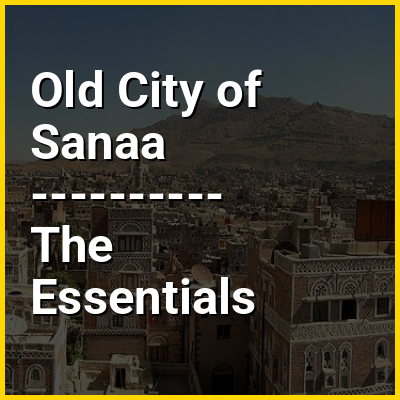
The Old City of Sanaʽa is a recognised UNESCO World Heritage Site in the Amanat Al Asimah Governorate, Yemen. As of 2003, the district had a population of 63,398 inhabitants. The old fortified city has been inhabited for more than 2,500 years and contains many intact architectural sites. The oldest, partially standing architectural structure in the Old City of Sanaʽa is Ghumdan Palace. The city was declared a World Heritage Site by the United Nations in 1986. Efforts are underway to preserve some of the oldest buildings some of which, such as the Samsarh and the Great Mosque of Sanaʽa, is more than 1,400 years old. Surrounded by ancient clay walls that stand 9–14 metres (30–46 ft) high, the Old City contains more than 100 mosques, 12 hammams (baths), and 6,500 houses. Many of the houses resemble ancient skyscrapers, reaching several stories high and topped with flat roofs. They are decorated with elaborate friezes and intricately carved frames and stained-glass windows.

British writer Jonathan Raban visited in the 1970s and described the city as "fortress-like, its architecture and layout resembling a labyrinth", further noting "It was like stepping out into the middle of a vast pop-up picture book. Away from the street, the whole city turned into a maze of another kind, a dense, jumbled alphabet of signs and symbols."
↓ Menu
HINT:

In this Dossier

Old City of Sanaa in the context of Sanaa

Sanaa, officially the Sanaa Municipality, is the capital and largest city of Yemen. The city is the capital of the Sanaa Governorate, but is not part of the governorate, as it forms a separate administrative unit. At an elevation of 2,300 metres (7,500 ft), Sanaa is the seventh highest capital city in the world and is next to the Sarawat Mountains of Jabal An-Nabi Shu'ayb and Jabal Tiyal, considered to be the highest mountains in the Arabian Peninsula and one of the highest in the Middle East.

Sanaa has a population of approximately 3,300,000 (2023), making it Yemen's largest city. As of 2020, the greater Sanaa urban area makes up about 10% of Yemen's total population. The Old City of Sanaa, a UNESCO World Heritage Site, has a distinctive architectural character, most notably expressed in its multi-story buildings decorated with geometric patterns. Al-Saleh Mosque, the largest in the country, is located in the southern outskirts of the city.

View the full Wikipedia page for Sanaa
↑ Return to Menu

Old City of Sanaa in the context of Architecture of Yemen

The architecture of Yemen dates back to ancient times, when it was part of a tradition of South Arabian architecture. Developments continued during the Islamic period, displaying both local characteristics and external influences. The historic cities and towns of Yemen are known for their traditional tower-houses.

View the full Wikipedia page for Architecture of Yemen
↑ Return to Menu