Neckline in the context of "Pleat"

Play Trivia Questions online!

or

Skip to study material about Neckline in the context of "Pleat"


⭐ Core Definition: Neckline

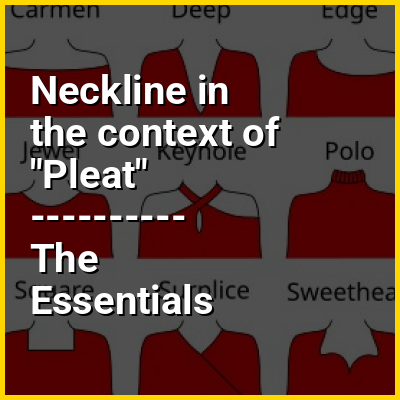
The neckline is the top edge or edges of a garment that surrounds the neck, especially from the front view. Neckline also refers to the overall visual line between all the layers of clothing and the neck and shoulders of a person, ignoring any unseen undergarments.

For each garment worn above the waist, the neckline is primarily a style line and may be a boundary for further shaping of the upper edge of a garment with, for example, a collar, cowl, darts, or pleats. In that respect it is similar to the waistline and hemline.

↓ Menu

In this Dossier

Neckline in the context of Dress

A dress (also known as a frock or a gown) is a one-piece outer garment that is worn on the torso, hangs down over the legs. Dresses often consist of a bodice attached to a skirt.

Dress shapes, silhouettes, textiles, and colors vary. In particular, dresses can vary by sleeve length, neckline, skirt length, or hemline. These variances may be based on considerations such as fashion trends, modesty, weather, and personal taste. Dresses are generally suitable for both formal wear and casual wear.

↑ Return to Menu

Neckline in the context of Collar (clothing)

In clothing, a collar is the part of a shirt, dress, coat or blouse that fastens around or frames the neck. Among clothing construction professionals, a collar is differentiated from other necklines such as revers and lapels, by being made from a separate piece of fabric, rather than a folded or cut part of the same piece of fabric used for the main body of the garment.

A collar may be permanently attached to the main body of the garment (e.g. by stitching) or detachable.

↑ Return to Menu

Neckline in the context of Décolletage

Cleavage is the narrow depression or hollow between the breasts of a woman. The superior portion of cleavage may be accentuated by clothing such as a low-cut neckline that exposes the division, and often the term is used to describe the low neckline itself, instead of the term décolletage. Joseph Breen, head of the U.S. film industry's Production Code Administration, coined the term in its current meaning when evaluating the 1943 film The Outlaw, starring Jane Russell. The term was explained in Time magazine on August 5, 1946. It is most commonly used in the parlance of Western female fashion to refer to necklines that reveal or emphasize décolletage (display of the upper breast area).

The visible display of cleavage can provide erotic pleasure for those who are sexually attracted to women, though this does not occur in all cultures. Explanations for this effect have included evolutionary psychology and dissociation from breastfeeding. Since at least the 15th century, women in the Western world have used their cleavage to flirt, attract, make political statements (such as in the Topfreedom movement), and assert power. In several parts of the world, the advent of Christianity and Islam saw a sharp decline in the amount of cleavage which was considered socially acceptable. In many cultures today, cleavage exposure is considered unwelcome or is banned legally. In some areas like European beaches and among many indigenous populations across the world, cleavage exposure is acceptable; conversely, even in the Western world it is often discouraged in daywear or in public spaces. In some cases, exposed cleavage can be a target for unwanted voyeuristic photography or sexual harassment.

↑ Return to Menu