Neapolitan dialect in the context of Naples metropolitan area


Neapolitan dialect in the context of Naples metropolitan area

⭐ Core Definition: Neapolitan dialect

Neapolitan (autonym: ('o n)napulitano [(o n)napuliˈtɑːnə]; Italian: napoletano) is a Romance language of the Southern Italo-Romance group spoken in most of continental Southern Italy. It is named after the Kingdom of Naples, which once covered most of the area, and the city of Naples was its capital. On 14 October 2008, a law by the Region of Campania stated that Neapolitan was to be protected.

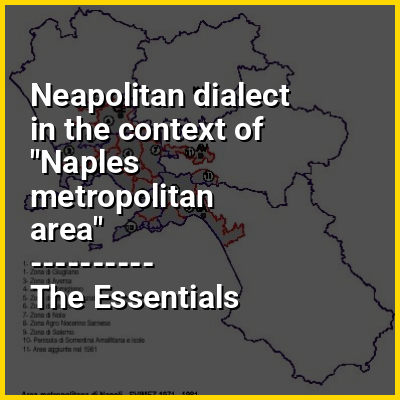
While the language group is native to much of continental Southern Italy or the former Kingdom of Naples, the terms Neapolitan, napulitano or napoletano may also instead refer more narrowly to the specific variety spoken natively in the city of Naples and the immediately surrounding Naples metropolitan area and Campania region. The present article mostly deals with this variety, which enjoys a certain degree of prestige and has historically wide written attestations.
↓ Menu
HINT:

In this Dossier

Neapolitan dialect in the context of Canusium

Canosa di Puglia, generally known simply as Canosa (Canosino: Canaus), is a town and comune in the province of Barletta-Andria-Trani, Apulia, southern Italy. It is located between Bari and Foggia, on the northwestern edge of the plateau of the Murgia which dominates the Ofanto valley and the extensive plains of Tavoliere delle Puglie, ranging from Mount Vulture at the Gargano, to the Adriatic coast. Canosa, the Roman Canusium, is considered the principal archaeological center of Apulia, and is one of the oldest continually inhabited cities in Italy. A number of vases and other archaeological finds are located in local museums and private collections. It is not far from the position on the Ofanto River where the Romans found refuge after the defeat of the Battle of Cannae and is the burial place of Bohemund I of Antioch.

View the full Wikipedia page for Canusium
↑ Return to Menu