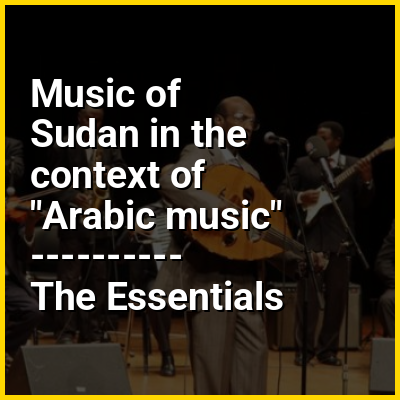
The rich and varied music of Sudan has traditional, rural, northeastern African roots and also shows Arabic, Western or other African influences, especially on the popular urban music from the early 20th century onwards. Since the establishment of big cities like Khartoum as melting pots for people of diverse backgrounds, their cultural heritage and tastes have shaped numerous forms of modern popular music. In the globalized world of today, the creation and consumption of music through satellite TV or on the Internet is a driving force for cultural change in Sudan, popular with local audiences as well as with Sudanese living abroad.
Even after the secession of South Sudan in 2011, the Sudan of today is very diverse, with five hundred plus ethnic groups spread across the territory of what is the third largest country in Africa. The cultures of its ethnic and social groups have been marked by a complex cultural legacy, going back to the spread of Islam, the regional history of the slave trade and by indigenous African and Arab cultural heritage. Though some of the ethnic groups still maintain their own African language, most Sudanese today use the distinct Sudanese version of Arabic.