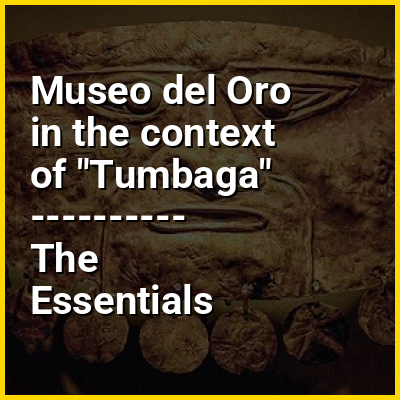
The Museum of Gold (Spanish: Museo del Oro) is an archaeology museum located in Bogotá, Colombia. It is one of the most visited touristic highlights in the country. The museum receives around 500,000 tourists per year.
The museum displays a selection of pre-Columbian gold and other metal alloys, such as Tumbaga, and contains the largest collection of gold artifacts in the world in its exhibition rooms on the second and third floors. Together with pottery, stone, shell, wood and textile objects, these items, made of what indigenous cultures considered to be a sacred metal, testify to the life and thought of the different societies which lived in present-day Colombia before the Spanish conquest of the Americas. Many indigenous groups did not consider gold to be a source of wealth, but rather held the belief it was charged with symbolic and religious values. The Spaniards, for example, reported the Inca royal family claimed to be descendants of the sun and the moon, and that gold was the “sweat of the sun” and silver the “tears of the moon.”